RECOMMENDATIONS

https://editorialia.com/wp-content/uploads/2020/05/cumplimiento_normativo_y_seguridad_ti_en_iot-3.jpg

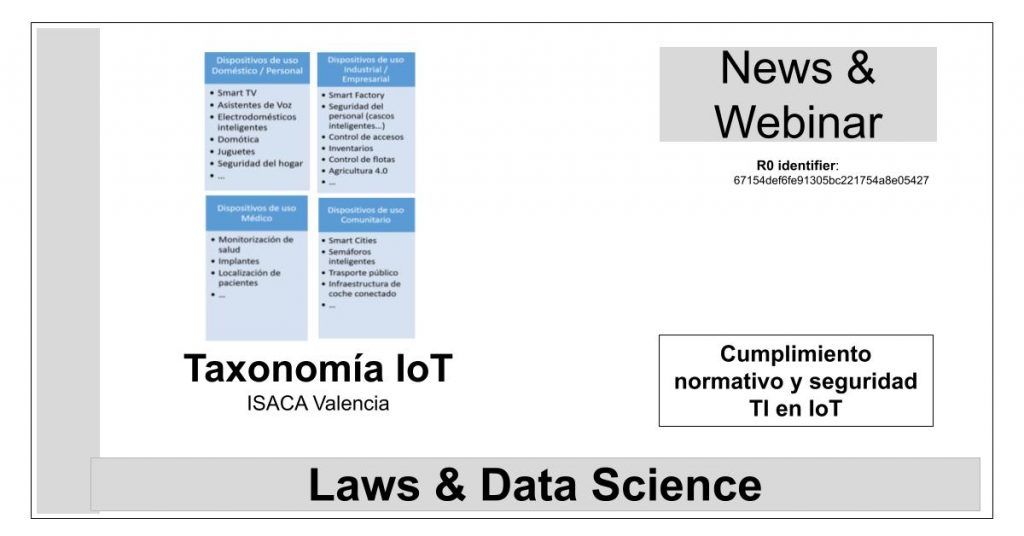
Cumplimiento normativo y seguridad TI en IoT

La conectividad y el tratamiento masivo de datos son dos pilares esenciales para el desarrollo de estos sistemas, los cuales, a su vez, introducen riesgos de seguridad y privacidad que deben ser tratados adecuadamente.

https://editorialia.com/wp-content/uploads/2020/05/european-data-supervisor-2019-1.jpg

The European Data Protection Supervisor, 2019 Annual Report a year of transition

With new legislation on data protection in the EU now in place, our greatest challenge moving into 2020 is to ensure that this legislation produces the promised results. This includes ensuring that new rules on ePrivacy remain firmly on the EU agenda. Awareness of the issues surrounding data protection and privacy and the importance of rotecting these fundamental rights is at an all time high and we cannot allow this momentum to decline.

https://editorialia.com/wp-content/uploads/2020/05/google_engineering_practices_documentation-1.jpg

Google Engineering Practices Documentation

Google has many generalized engineering practices that cover all languages and all projects. These documents represent their collective experience of various best practices that they have developed over time. It is possible that open source projects or other organizations would benefit from this knowledge.

https://editorialia.com/wp-content/uploads/2020/05/artificial-intelligence-and-machine-learning-in-software-as-a-medical-device_-discussion-paper-and-request-for-feedback-4.jpg

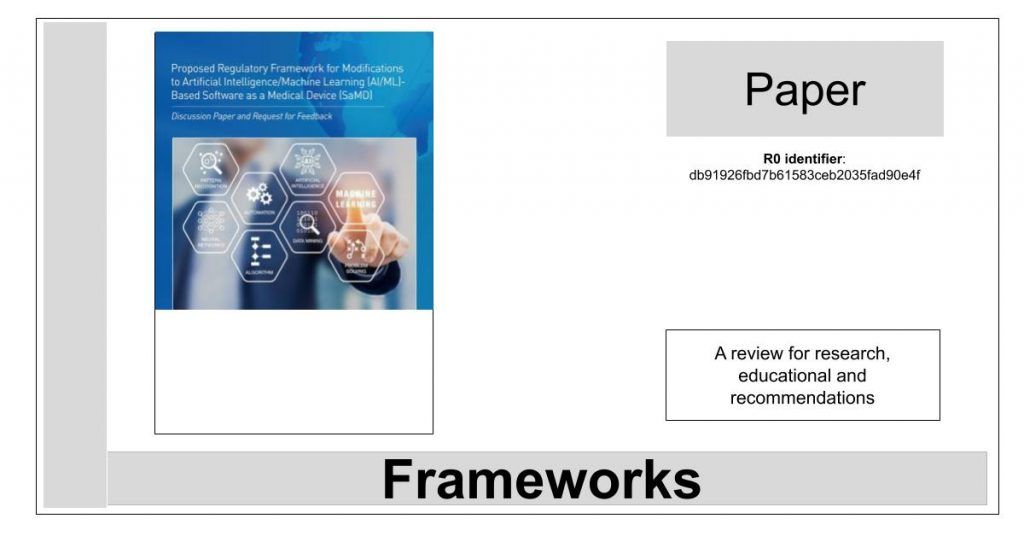
Artificial Intelligence and Machine Learning in Software as a Medical Device: discussion Paper and Request for Feedback

Artificial intelligence and machine learning technologies have the potential to transform health care by deriving new and important insights from the vast amount of data generated during the delivery of health care every day. Medical device manufacturers are using these technologies to innovate their products to better assist health care providers and improve patient care. The FDA is considering a total product lifecycle-based regulatory framework for these technologies.

https://editorialia.com/wp-content/uploads/2020/04/e74ee944-e7de-480c-9b60-665e97c78261.png

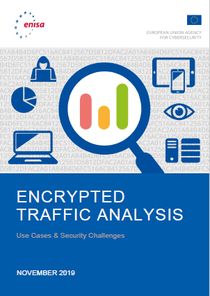
Encrypted Traffic Analysis

This report explores the current state of affairs in Encrypted Traffic Analysis and in particular discusses research and methods in 6 key use cases; viz. application identification, network analytics, user information identification, detection of encrypted malware, file/device/website/location fingerprinting and DNS tunnelling detection.

https://editorialia.com/wp-content/uploads/2020/06/scipy-programming-succinctly.jpg

SciPy Programming Succinctly

The SciPy library, accompanied by its interdependent NumPy, offers Python programmers advanced functions that work with arrays and matrices. Each section presents a complete demo program for programmers to experiment with, carefully chosen examples to best illustrate each function, and resources for further learning. Use this e-book to install and edit SciPy, and use arrays, matrices, and combinatorics in Python programming.

https://editorialia.com/wp-content/uploads/2020/06/data-structures-succinctly-part-2.jpg

Data Structures Succinctly Part 2

Data Structures Succinctly Part 2 is your concise guide to skip lists, hash tables, heaps, priority queues, AVL trees, and B-trees. As with the first book, you’ll learn how the structures behave, how to interact with them, and their performance limitations. Starting with skip lists and hash tables, and then moving to complex AVL trees and B-trees, author Robert Horvick explains what each structure’s methods and classes are, the algorithms behind them, and what is necessary to keep them valid.

https://editorialia.com/wp-content/uploads/2020/04/cmglee_cambridge_science_festival_2015_da_vinci.jpg

The need for a system view to regulate artificial intelligence/machine learning-based software as medical device

FDA need to widen their scope from evaluating medical AI/ML-based products to assessing systems. This shift in perspective—from a product view to a system view—is central to maximizing the safety and efficacy of AI/ML in health care, but it also poses significant challenges for agencies like the FDA who are used to regulating products, not systems. We offer several suggestions for regulators to make this challenging but important transition

https://editorialia.com/wp-content/uploads/2020/06/data-structuressuccinctly-part-1.jpg

Data Structures Succinctly Part 1

Data Structures Succinctly Part 1 is your first step to a better understanding of the different types of data structures, how they behave, and how to interact with them. Starting with simple linked lists and arrays, and then moving to more complex structures like binary search trees and sets, author Robert Horvick explains what each structure’s methods and classes are and the algorithms behind them. Horvick goes a step further to detail their operational and resource complexity, ensuring that you have a clear understanding of what using a specific data structure entails.

https://editorialia.com/wp-content/uploads/2020/04/when-autonomous-vehicles-are-hacked-who-is-liable.jpg

When Autonomous Vehicles Are Hacked, Who Is Liable?

Who might face civil liability if autonomous vehicles (AVs) are hacked to steal data or inflict mayhem, injuries, and damage? How will the civil justice and insurance systems adjust to handle such claims? RAND researchers addressed these questions to help those in the automotive, technology, legal, and insurance industries prepare for the shifting roles and responsibilities that the era of AVs may bring.