English (Articles)

https://editorialia.com/wp-content/uploads/2020/06/data-science-at-the-command-line.jpg

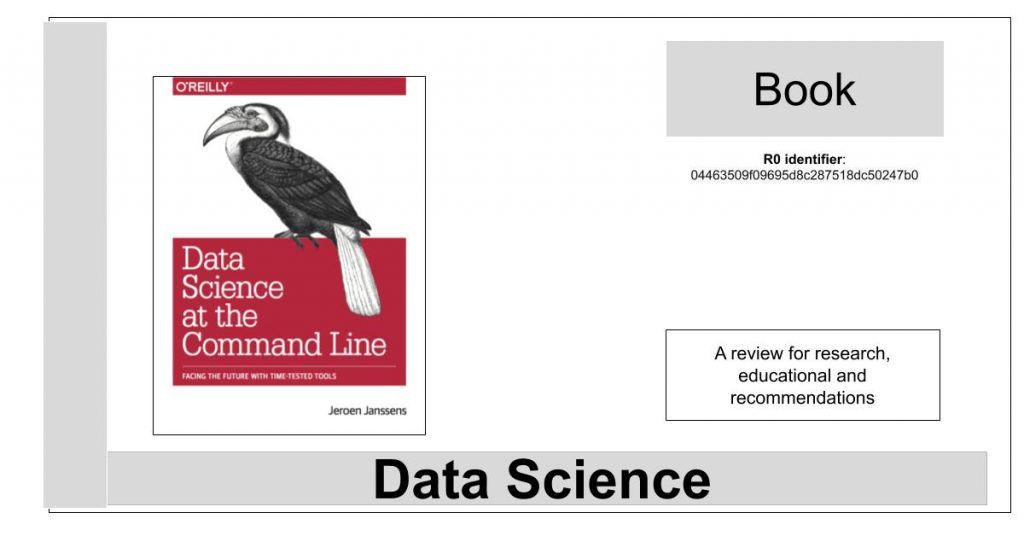
Data Science at the Command Line

Today, data scientists can choose from an overwhelming collection of exciting technologies and programming languages. Python, R, Hadoop, Julia, Pig, Hive, and Spark are but a few examples. You may already have experience in one or more of these. If so, then why should you still care about the command line for doing data science? What does the command line have to offer that these other technologies and programming languages do not?

https://editorialia.com/wp-content/uploads/2020/06/r-programming-succinctly.jpg

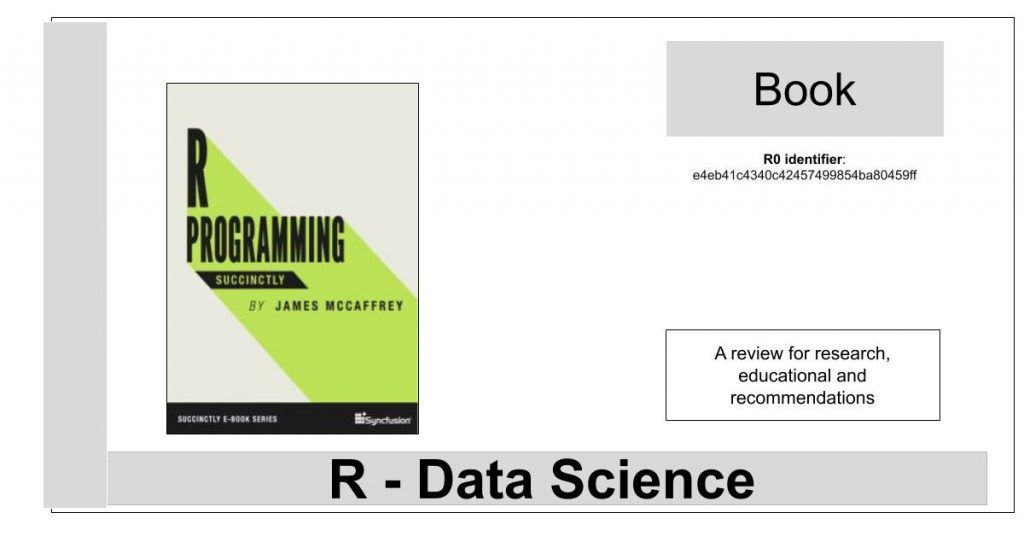
R Programming Succinctly

The R programming language on its own is a powerful tool that can perform thousands of statistical tasks, but by writing programs in R, you gain tremendous power and flexibility to extend its base functionality. Senior Succinctly series author and editor James McCaffrey shows you how in R Programming Succinctly.

https://editorialia.com/wp-content/uploads/2020/06/scala-succinctly.jpg

Scala Succinctly

Chris Rose guides readers through the basics of Scala, from installation to syntax shorthand, so that they can get up and running quickly.

https://editorialia.com/wp-content/uploads/2020/06/introduction-to-cntk-succinctly.jpg

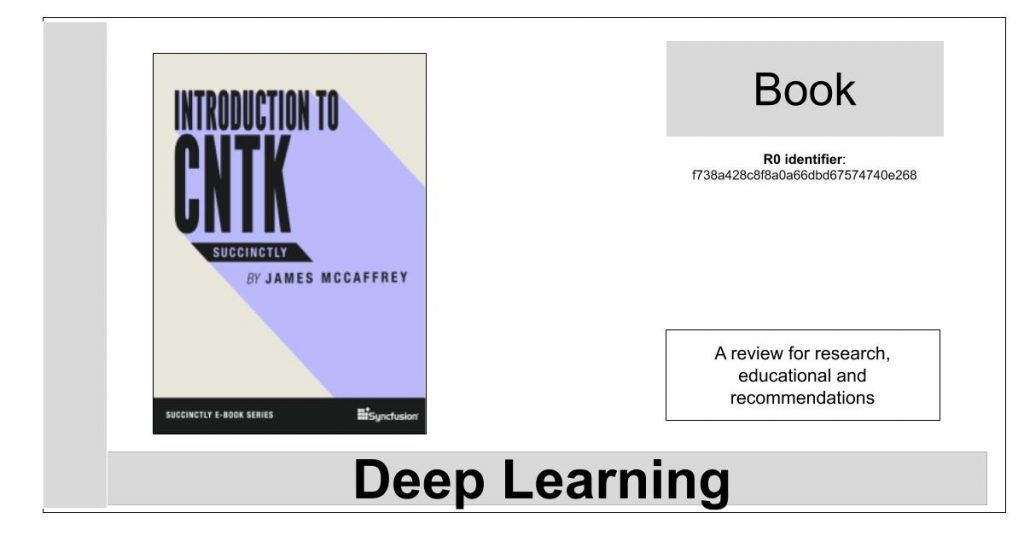
Introduction to CNTK Succinctly (Microsoft Cognitive Toolkit)

“Microsoft CNTK (Cognitive Toolkit, formerly Computational Network Toolkit), an open source code framework, enables you to create feed-forward neural network time series prediction systems, convolutional neural network image classifiers, and other deep learning systems. In Introduction to CNTK Succinctly, author James McCaffrey offers instruction on the basics of installing and running CNTK, and also addresses machine-learning regression and classification techniques. Exercises and explanations are included in each chapter”. (Syncfusion)

https://editorialia.com/wp-content/uploads/2020/06/keras-succinctly.jpg

Keras Succinctly

Neural networks are a powerful tool for developers, but harnessing them can be a challenge. With Keras Succinctly, author James McCaffrey introduces Keras, an open-source, neural network library designed specifically to make working with backend neural network tools easier.

https://editorialia.com/wp-content/uploads/2020/06/efficient-r-programming.jpg

Efficient R programming

There are many excellent R resources for visualization, data science, and package development. Hundreds of scattered vignettes, web pages, and forums explain how to use R in particular domains. But little has been written on how to simply make R work effectively-until now.

https://editorialia.com/wp-content/uploads/2020/06/sql-notes-for-professionals-book.jpg

SQL Notes for Professionals book

This SQL Notes for Professionals book is compiled from Stack Overflow Documentation. (166 pages, published on May 2018)

https://editorialia.com/wp-content/uploads/2020/06/deep-learning-or-machine-learning.jpg

Deep Learning or Machine Learning? (MathWorks)

“In this ebook, we discuss some of the key differences between deep learning and traditional machine learning approaches. We look at three factors that might influence your decision and then step through an example that combines the two approaches”. (MathWorks).

https://editorialia.com/wp-content/uploads/2020/02/logo-tpot.jpg

TPOT is a Python Automated Machine Learning tool

Consider TPOT your Data Science Assistant. TPOT is a Python Automated Machine Learning (AutoML) tool that optimizes machine learning pipelines using genetic programming.