English (Articles)

->Artificial intelligence towards data science

Probabilistic Machine Learning for Healthcare

Machine learning can be used to make sense of healthcare data. Probabilistic machine learning models help provide a complete picture of observed data in healthcare. In this review, we examine how probabilistic machine learning can advance healthcare. We consider challenges in the predictive model building pipeline where probabilistic models can be beneficial including calibration and missing data. Beyond predictive models, we also investigate the utility of probabilistic machine learning models in phenotyping, in generative models for clinical use cases, and in reinforcement learning.

https://editorialia.com/wp-content/uploads/2020/09/what-is-meaningful-privacy.jpg

WHAT IS [MEANINGFUL PRIVACY]*

Meaningful privacy and how it is applied in technology will be the focus of 60 privacy preserving leaders from around the globe during the OpenMined Privacy conference Sept 26 and 27 2020 with more than 2000 in attendance virtually.

https://editorialia.com/wp-content/uploads/2020/09/the-future-of-ai.jpg

The future of AI

If you wonder what is next in the evolution towards general AI then this session is for you. We have seen some painful failures of artificial intelligence pointing to a lack of ‘common sense’. Are neural networks really the solution we seek or is a new path needed? Find out what IBM Research is cooking in terms of hardware and software in the never ending quest towards General AI.

https://editorialia.com/wp-content/uploads/2020/09/by-danny-friedman-machine-learning-from-scratch-1.jpg

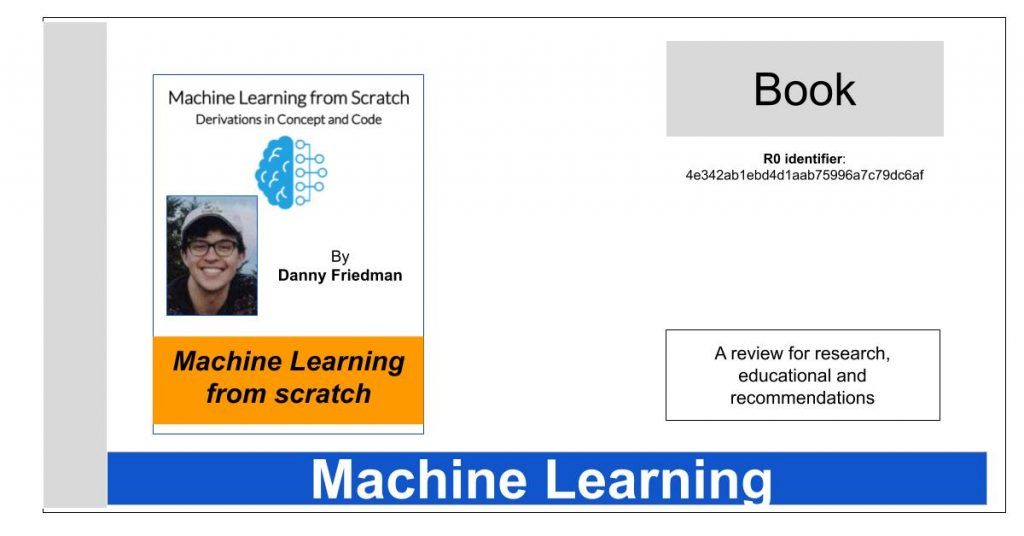
Machine Learning from scratch (by Danny Friedman)

This book covers the building blocks of the most common methods in machine learning. This set of methods is like a toolbox for machine learning engineers. Those entering the field of machine learning should feel comfortable with this toolbox so they have the right tool for a variety of tasks.

https://editorialia.com/wp-content/uploads/2020/08/ieee-use-casee28093criteria-for-addressing-ethical-challenges-in-transparency-accountability-and-privacy-of-cta_ctt.jpg

IEEE Use Case–Criteria for Addressing Ethical Challenges in Transparency, Accountability, and Privacy of CTA/CTT

There are substantial public health benefits gained through successfully alerting individuals and relevant public health institutions of a person’s exposure to a communicable disease. Contact tracing techniques have been applied to epidemiology for centuries, traditionally involving a manual process of interview and follow-up. This is time-consuming, difficult, and dangerous work. Manual processes are also open to incomplete information because they rely on individuals being willing and able to remember and report all contact possibilities.

https://editorialia.com/wp-content/uploads/2020/08/the-deep-learning-revolution-and-its-implications-for-computer-architecture-and-chip-design.jpg

The Deep Learning Revolution and Its Implications for Computer Architecture and Chip Design

The past decade has seen a remarkable series of advances in machine learning, and in particular deep learning approaches based on artificial neural networks, to improve our abilities to build more accurate systems across a broad range of areas, including computer vision, speech recognition, language translation, and natural language understanding tasks.

https://editorialia.com/wp-content/uploads/2020/08/artificial-intelligence-in-medical-imaging.jpg

Artificial Intelligence in Medical Imaging

“This book provides a thorough overview of the ongoing evolution in the application of artificial intelligence (AI) within healthcare and radiology, enabling readers to gain a deeper insight into the technological background of AI and the impacts of new and emerging technologies on medical imaging”.

https://editorialia.com/wp-content/uploads/2020/07/textattack-a-framework-for-adversarial-attacks-data-augmentation-and-adversarial-training-in-nlp.jpg

TextAttack: A Framework for Adversarial Attacks, Data Augmentation, and Adversarial Training in NLP

This paper introduces TextAttack, a Python framework for adversarial attacks, data augmentation, and adversarial training in NLP. TextAttack builds attacks from four components: a goal function, a set of constraints, a transformation, and a search method. TextAttack’s modular design enables researchers to easily construct attacks from combinations of novel and existing components. TextAttack provides implementations of 16 adversarial attacks from the literature and supports a variety of models and datasets, including BERT and other transformers, and all GLUE tasks.