#Medicine
Machine Learning for Medical Imaging Analysis Demystified
This lecture will outline the fundamental ML processes involved in medical image analysis. Achieving prediction and classification for CAD applications will also be discussed. Some preliminary ideas of 3D reconstruction and viewing as applied in medical image analysis will also be presented.
Artificial Intelligence and Machine Learning in Software as a Medical Device: discussion Paper and Request for Feedback
Artificial intelligence and machine learning technologies have the potential to transform health care by deriving new and important insights from the vast amount of data generated during the delivery of health care every day. Medical device manufacturers are using these technologies to innovate their products to better assist health care providers and improve patient care. The FDA is considering a total product lifecycle-based regulatory framework for these technologies.
ICT security certification opportunities in the healthcare sector
Digital solutions for healthcare open a plethora of new possibilities in this area. They provide a technical base for easy testing, they improve significantly the quality of service by allowing immediate access to medical data – results of tests, history of treatment; they facilitate correct diagnosis by easier analytics and correlation of data and easier monitoring of patients’ health parameters. They facilitate setting up appointments with appropriate doctors at a convenient time
EEG-based Brain-Computer Interfaces (BCIs): A Survey of Recent Studies on Signal Sensing Technologies and Computational Intelligence Approaches and their Applications
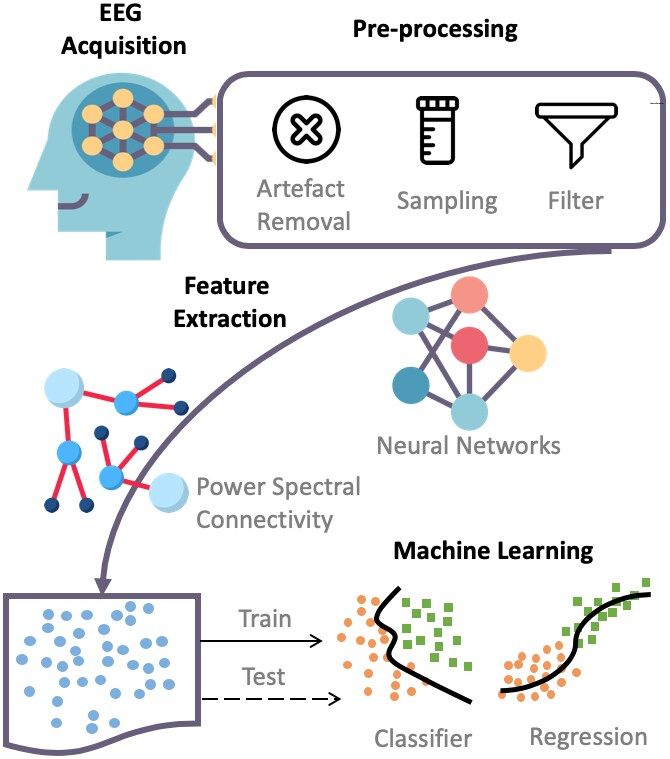
Recent technological advances such as wearable sensing devices, real-time data streaming, machine learning, and deep learning approaches have increased interest in electroencephalographic (EEG) based BCI for translational and healthcare applications.
Células y proteínas: el modelo SNARE-CNN (red neuronal convolucional 2D)
Usando el modelo, en sus conclusiones, los autores señalan que las nuevas proteínas SNARE pueden identificarse con precisión y usarse para el desarrollo de fármacos. Y tratándose de enfermedades como las neurodegenerativas, mentales y el cáncer podemos y debemos interesarnos por este trabajo aplicado al campo de la bioinformática computacional, la minería de datos y el Machine Learning.