
The Virtual Humans Factory
Harnessing the power of supercomputer and patient modelling to deliver unparallelled medical insights and predict treatment outcomes for patients.
Harnessing the power of supercomputer and patient modelling to deliver unparallelled medical insights and predict treatment outcomes for patients.

DIH-HERO makes available up to €5 million for robotic solutions that tackle COVID19. Joining the Commission’s AI-Robotics vs COVID19 initiative, the project mobilises part of its Horizon 2020 funding to support healthcare professionals and save lives.
Up to €5 million from the EU-Funded DIH-HERO for robotic solutions that tackle COVID19 Leer más »

Guide to making visualizations that accurately reflect the data, tell a story, and look professional. It has grown out of my experience of working with students and postdocs in my laboratory on thousands of data visualizations.
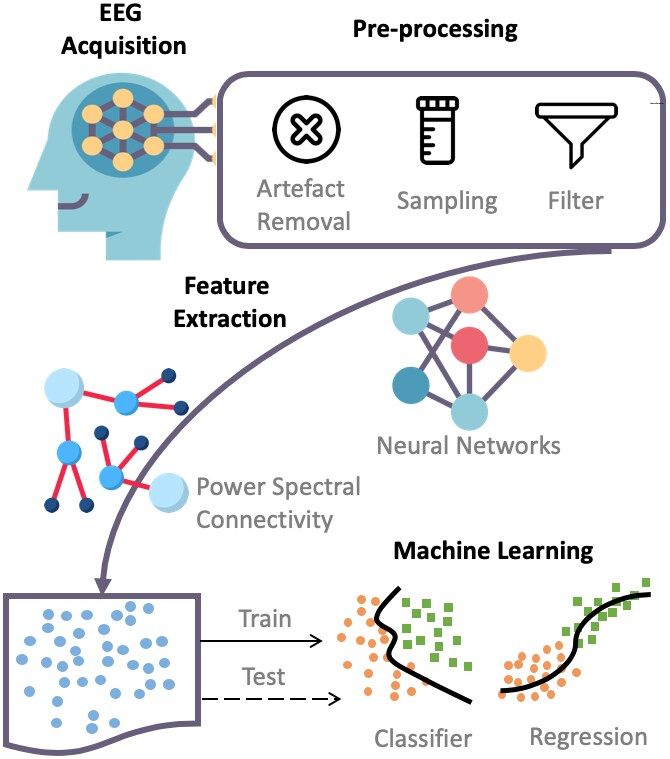
Recent technological advances such as wearable sensing devices, real-time data streaming, machine learning, and deep learning approaches have increased interest in electroencephalographic (EEG) based BCI for translational and healthcare applications.

El equipo de investigación dirigido por la Universidad de Bath y que incluye investigadores de las universidades de Bristol, Zurich y Auckland describió unas neuronas artificiales en un estudio publicado en la revista «Nature». Sus usos obvios inmediatos son en casos de lesión espinal o en enfermedades degenerativas como el Alzheimer.
Neuronas artificiales en chips de silicio Leer más »

Una píldora endoscópica ingerible inocua, gestionable, distributiva de medicación, selectiva y con capacidades de monitorización dinámica
💊 Dispositivos médicos ingeribles que pueden descomponerse con luz Leer más »
Most technologies are made from steel, concrete, chemicals, and plastics, which degrade over time and can produce harmful ecological and health side effects. It would thus be useful to build technologies using self-renewing and biocompatible materials, of which the ideal candidates are living systems themselves. Thus, we here present a method that designs completely biological machines from the ground up: computers automatically design new machines in simulation, and the best designs are then built by combining together different biological tissues. This suggests others may use this approach to design a variety of living machines to safely deliver drugs inside the human body, help with environmental remediation, or further broaden our understanding of the diverse forms and functions life may adopt.
A scalable pipeline for designing reconfigurable organisms Leer más »

Usando el modelo, en sus conclusiones, los autores señalan que las nuevas proteínas SNARE pueden identificarse con precisión y usarse para el desarrollo de fármacos. Y tratándose de enfermedades como las neurodegenerativas, mentales y el cáncer podemos y debemos interesarnos por este trabajo aplicado al campo de la bioinformática computacional, la minería de datos y el Machine Learning.
Células y proteínas: el modelo SNARE-CNN (red neuronal convolucional 2D) Leer más »
El Proyecto Algonauts reúne a investigadores de inteligencia biológica y artificial en una plataforma común para intercambiar ideas y avanzar en ambos campos. Explicando el cerebro visual humano, se centra en construir modelos de visión por computadora que simulen cómo el cerebro ve y reconoce objetos, un tema que ha fascinado a los neurocientíficos y científicos de la computación.