When an employer introduces an AI assistant, workers discover which tasks become easier and which errors they must now catch. When a town approves a data centre, residents live with the jobs, the electricity demand and the contract long after the opening ceremony. AI and Society follows these decisions from the promise to the people who bear the consequences.
The collection starts from a democratic principle. People have a say in the conditions under which AI enters their lives. They can accept a proposal, ask for limits, or judge that a different use of public resources serves them better. That judgment deserves evidence, a hearing for dissent and a decision someone can challenge.
Latest in AI and Society
-
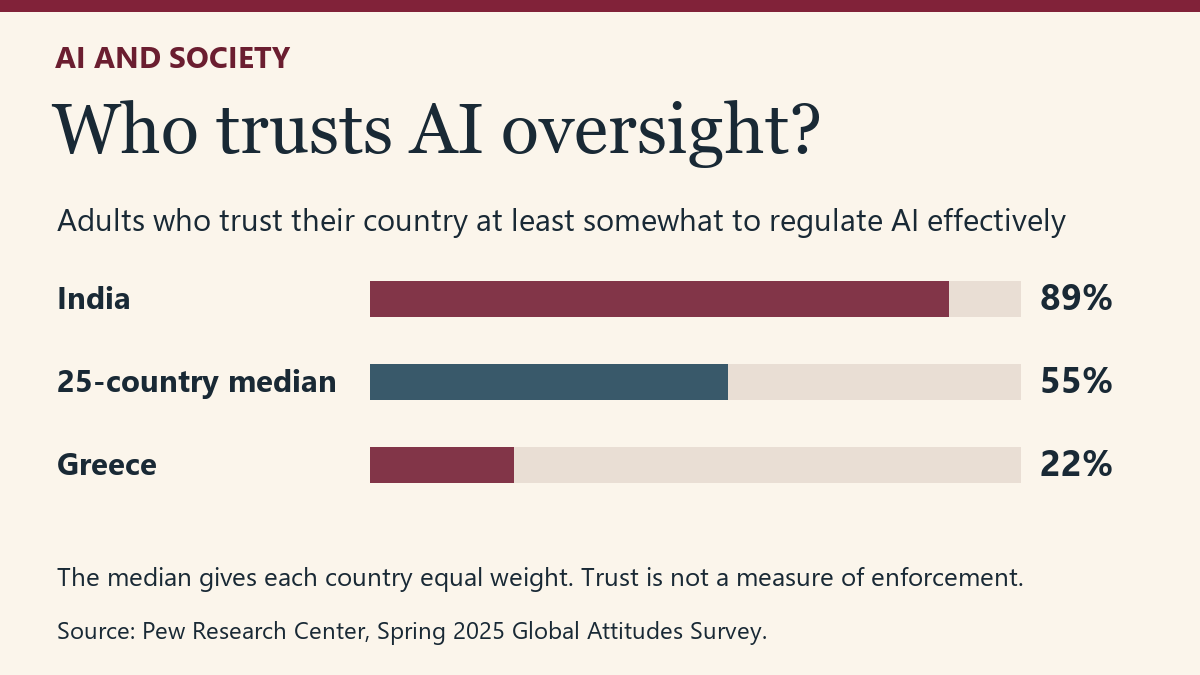
When AI gets it wrong, who can put it right?
A shopper flagged by a camera and a family told to repay a debt face the same question: who can reverse the decision? Court orders, public inquiries and…
-
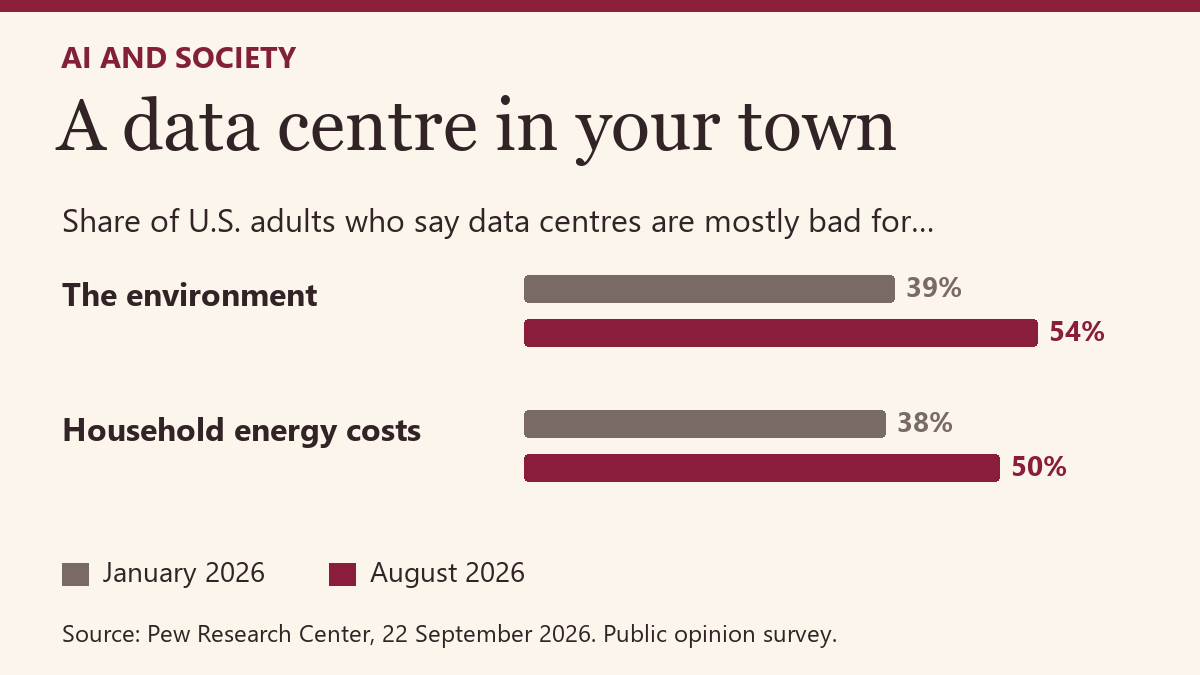
Who gets to say yes to AI? A data centre in your town
Who pays for the power lines when a data centre leaves town? Residents weigh promised jobs against electricity demand, water use and the cost of putting things right.…
Articles in the collection
-
When AI gets it wrong, who can put it right?
A shopper flagged by a camera and a family told to repay a debt face the same question: who can reverse the decision? Court orders, public inquiries and national plans reveal what governments have actually delivered and where…
-
Who gets to say yes to AI? A data centre in your town
Who pays for the power lines when a data centre leaves town? Residents weigh promised jobs against electricity demand, water use and the cost of putting things right. U.S. survey evidence shows how public attitudes towards energy costs…
Where the evidence stands
In Pew Research Center’s spring 2025 survey, the median across 25 countries was 42% equally concerned and excited about the growing use of AI, 34% more concerned and 16% more excited. Each figure is a separate country median. The survey gives a picture of ambivalence across the countries studied. Decisions about a classroom, a workplace or a hospital still require listening to the people affected there. Pew Research Center, survey and country results.
Power, water and land
A proposed data centre raises questions about peak demand, the source of cooling water, permanent jobs and responsibility for grid upgrades. National projections can put a project in context. Local permits and utility records tell residents which commitments they can enforce. International Energy Agency, energy and AI.
Work, skills and education
In one company, a study of 5,172 customer-support agents found that access to an AI assistant increased issues resolved per hour by 15% on average, with marked differences by experience. That is a measured workplace outcome. The ILO’s estimates of occupational exposure describe which tasks might change. In education, a pupil’s ability to explain an answer unaided is a different outcome again. Quarterly Journal of Economics, Generative AI at Work · ILO occupational exposure index · UNESCO guidance for education.
Health, public services and the right to appeal
A study of a U.S. health algorithm found that, at the same risk score, Black patients were sicker than White patients. The system used past health spending as a proxy for need. Its lesson travels beyond medicine. Before a score determines who gets help, ask what it measures, whose needs its records miss and who can correct a decision. Obermeyer and colleagues, Science.
Ownership, finance and the public bill
A cloud investment can give a developer access to computing power while tying future purchases to a provider. The U.S. Federal Trade Commission documented such commitments in its study of major partnerships. For readers, the practical questions are who can switch supplier, who captures the gains and who absorbs stranded costs if demand disappoints. FTC staff analysis of AI partnerships.
Information, culture and public trust
When an AI system summarises the news or answers a question about an election, can the reader find the original evidence, hear a different account and see a correction? This branch follows the chain from the source to the published claim and asks whose work or language disappears along the way. UNESCO Recommendation on the Ethics of Artificial Intelligence.
Participation and democratic control
Who is invited before a decision, who has time to participate, and what happens when the public objects? Citizens’ assemblies, consultations and oversight bodies offer different answers. A useful test is whether the authority gives a reasoned response and leaves a practical route to review. OECD comparative study of deliberative processes.
Cite this proposal
APA
Lloret Egea, J. A. (2026, November 14). AI and Society. La Biblia de la IA – The Bible of AI™. https://editorialia.com/ai-and-society/
MLA
Lloret Egea, Juan Antonio. “AI and Society.” La Biblia de la IA – The Bible of AI™, 14 Nov. 2026, https://editorialia.com/ai-and-society/.
Harvard
Lloret Egea, J.A. (2026) ‘AI and Society’, La Biblia de la IA – The Bible of AI™, 14 November. Available at https://editorialia.com/ai-and-society/.
Vancouver
Lloret Egea JA. AI and Society. La Biblia de la IA – The Bible of AI™ [Internet]. 2026 Nov 14. Available from https://editorialia.com/ai-and-society/.
Chicago
Lloret Egea, Juan Antonio. “AI and Society.” La Biblia de la IA – The Bible of AI™. November 14, 2026. https://editorialia.com/ai-and-society/.
IEEE
J. A. Lloret Egea, “AI and Society”, La Biblia de la IA – The Bible of AI™, Nov. 14, 2026. [Online]. Available: https://editorialia.com/ai-and-society/.