State-Art (Article)

r0: 10f953633b3db3b4dc07e63a493e9b66

Contemporary AI lacks the imagination to diverge or negate in science

Bold projections that artificial intelligence will accelerate scientific discovery have raced ahead of evidence from working scientists, and the field still lacks large-scale, scientist-in-the-loop tests of these claims. Here we mount the largest such evaluation to date and map what AI cannot yet do for science. We invited authors of 121,640 recent preprints across biology, medicine, chemistry, and the social sciences to judge ideas that large language models (LLMs) generated from the context and puzzles of their own papers. 6,749 scientists returned 25,139 sets of ratings on novelty, empirical feasibility, probability of being true, and favorability of adoption. Three patterns emerge. First, non-reasoning LLMs collapse into a narrow «hivemind» of similar ideas; reasoning models roam a wider hypothesis space, yet no model class spontaneously proposes null hypotheses — a move humans make more freely. Second, scientists reward ideas that resemble their own and prize probability over novelty, though social scientists tolerate risk more readily than life scientists. Senior social scientists are the harshest critics, and their skepticism is well-earned: LLMs falter most in pluralistic fields like the social sciences that demand context-aware interpretation and evolving theories. Third, automated evaluators on which the community currently relies — LLM-as-a-judge, artificial metrics, and even state-of-the-art (SOTA) models — agree only weakly with expert judgment, and retrieval augmentation and scientist persona prompting yield only marginal gains. A Qwen3-14B reward model we post-trained on human ratings captures field taste nuances, beats SOTA models by up to 27%, and closes the gap to the inter-rater consistency of independent peer reviewers. For all the hype, today’s scientific AI still represents a collaborator whose imagination, outputs and judgment benefit from human grounding.

Contemporary AI lacks the imagination to diverge or negate in science Leer más »

El arte de la Inteligencia Artificial desde una perspectiva léxica

El arte de la Inteligencia Artificial desde una perspectiva léxica

El principal objetivo de este documento es construir un glosario, a partir de las propuestas léxicas realizadas por los diferentes entes tecnológicos (ISO, IEEE, Wikipedia y Oxford University Press). Adicionalmente, el glosario estará estructurado según las ramas de conocimiento de esta área de trabajo, determinando exhaustiva y detalladamente las características de los términos que se incluirán en él para así facilitar una lectura amigable a la par que eficiente al usuario.

El arte de la Inteligencia Artificial desde una perspectiva léxica Leer más »

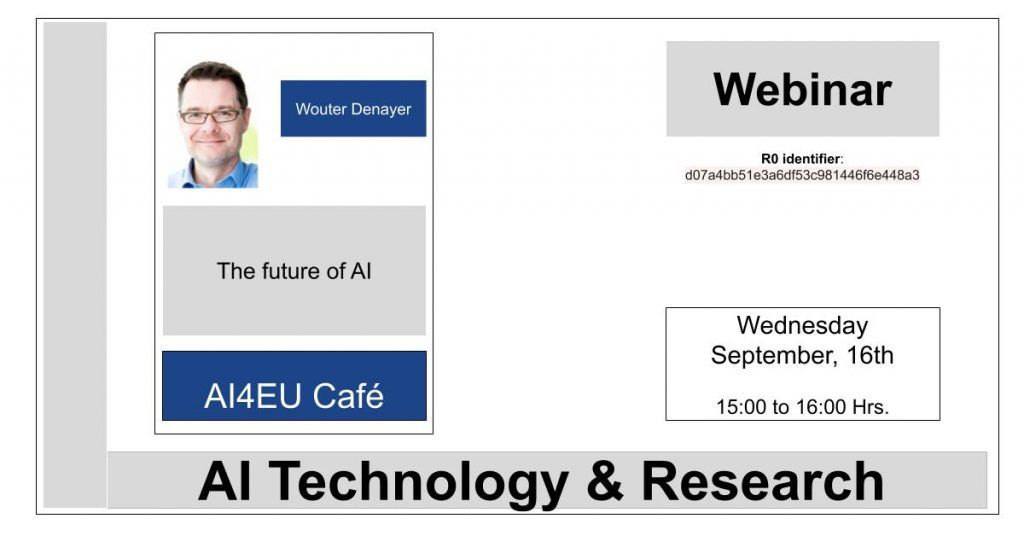
The future of AI

The future of AI

If you wonder what is next in the evolution towards general AI then this session is for you. We have seen some painful failures of artificial intelligence pointing to a lack of ‘common sense’. Are neural networks really the solution we seek or is a new path needed? Find out what IBM Research is cooking in terms of hardware and software in the never ending quest towards General AI.

The future of AI Leer más »

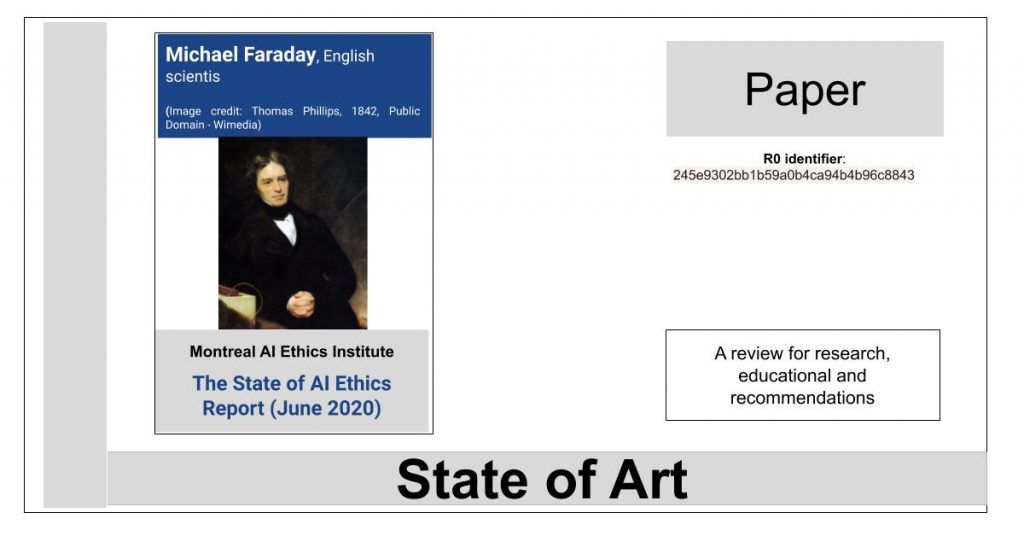
The State of AI Ethics Report (June 2020)

The State of AI Ethics Report (June 2020)

It has never been more important that we keep a sharp eye out on the development of this field and how it is shaping our society and interactions with each other. With this inaugural edition of the State of AI Ethics we hope to bring forward the most important developments that caught our attention at the Montreal AI Ethics Institute this past quarter. Our goal is to help you navigate this ever-evolving field swiftly and allow you and your organization to make informed decisions.

The State of AI Ethics Report (June 2020) Leer más »

Unconventional Computer Arithmetic for Emerging Applications and Technologies

Unconventional Computer Arithmetic for Emerging Applications and Technologies

Arithmetic plays a major role in computing performance and efficiency. It is challenging to build platforms, ranging from embedded devices to high performance computers, supported on traditional binary arithmetic and silicon-based technologies that meet the requirements of today’s applications. In this talk, the state-of-the-art of non-conventional computer arithmetic is presented, considering alternative computing models and emerging technologies.

Unconventional Computer Arithmetic for Emerging Applications and Technologies Leer más »