Copyright

https://editorialia.com/wp-content/uploads/2020/06/data-structuressuccinctly-part-1.jpg

Data Structures Succinctly Part 1

Data Structures Succinctly Part 1 is your first step to a better understanding of the different types of data structures, how they behave, and how to interact with them. Starting with simple linked lists and arrays, and then moving to more complex structures like binary search trees and sets, author Robert Horvick explains what each structure’s methods and classes are and the algorithms behind them. Horvick goes a step further to detail their operational and resource complexity, ensuring that you have a clear understanding of what using a specific data structure entails.

https://editorialia.com/wp-content/uploads/2020/04/when-autonomous-vehicles-are-hacked-who-is-liable.jpg

When Autonomous Vehicles Are Hacked, Who Is Liable?

Who might face civil liability if autonomous vehicles (AVs) are hacked to steal data or inflict mayhem, injuries, and damage? How will the civil justice and insurance systems adjust to handle such claims? RAND researchers addressed these questions to help those in the automotive, technology, legal, and insurance industries prepare for the shifting roles and responsibilities that the era of AVs may bring.

https://editorialia.com/wp-content/uploads/2020/06/standardisation-in-support-of-the-cybersecurity-certification.jpg

Standardisation in support of the Cybersecurity Certification

The document presents the value of the cybersecurity standardisation efforts for certification, the roles and responsibilities of Standards Developing Organisations (SDOs) in this context, and discusses various ways how standardisation can support efficiently the process of certification schemes creation by following a step by step methodology.

https://editorialia.com/wp-content/uploads/2020/06/ict-security-certification-opportunities-in-the-healthcare-sector.jpg

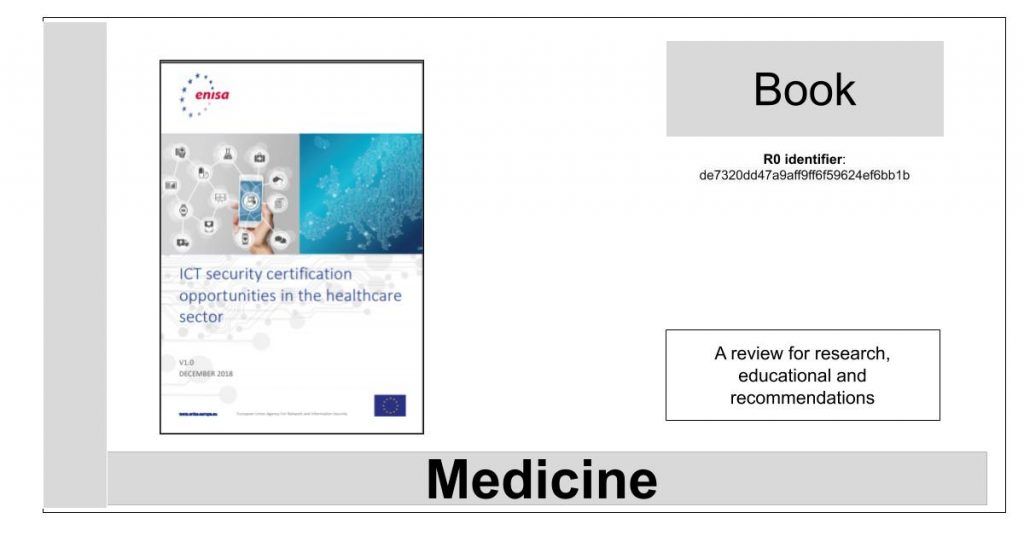
ICT security certification opportunities in the healthcare sector

Digital solutions for healthcare open a plethora of new possibilities in this area. They provide a technical base for easy testing, they improve significantly the quality of service by allowing immediate access to medical data – results of tests, history of treatment; they facilitate correct diagnosis by easier analytics and correlation of data and easier monitoring of patients’ health parameters. They facilitate setting up appointments with appropriate doctors at a convenient time

https://editorialia.com/wp-content/uploads/2020/06/advanced-r.jpg

Advanced R

Advanced R helps you understand how R works at a fundamental level. It is designed for R programmers who want to deepen their understanding of the language, and programmers experienced in other languages who want to understand what makes R different and special. This book will teach you the foundations of R; three fundamental programming paradigms (functional, object-oriented, and metaprogramming); and powerful techniques for debugging and optimising your code.

https://editorialia.com/wp-content/uploads/2020/06/ipython_interactive_computing_and_visualization_cookbook.jpg

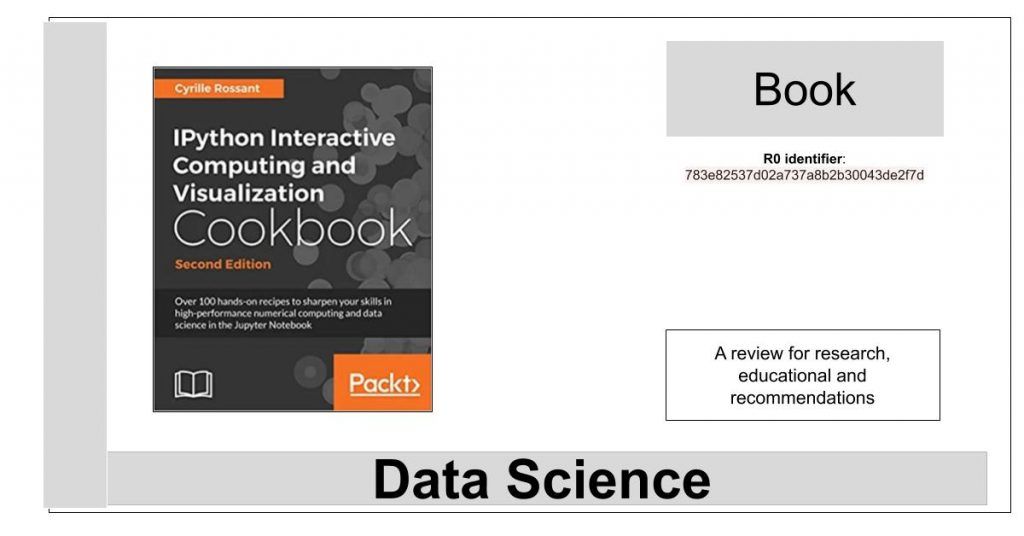
IPython Interactive Computing and Visualization Cookbook

IPython Interactive Computing and Visualization Cookbook, Second Edition contains many ready-to-use, focused recipes for high-performance scientific computing and data analysis, from the latest IPython/Jupyter features to the most advanced tricks, to help you write better and faster code.

https://editorialia.com/wp-content/uploads/2020/04/artificial-intelligence-foundations-of-computational-agents.jpg

Artificial Intelligence: Foundations of Computational Agents

It presents artificial intelligence as the study of the design of intelligent computational agents. The book is structured as a textbook, but it is accessible to a wide audience of professionals and researchers. In the last decades we have witnessed the emergence of artificial intelligence as a serious science and engineering discipline. This book provides an accessible synthesis of the field aimed at undergraduate and graduate students. It provides a coherent vision of the foundations of the field as it is today. It aims to provide that synthesis as an integrated science, in terms of a multi-dimensional design space that has been partially explored. As with any science worth its salt, artificial intelligence has a coherent, formal theory and a rambunctious experimental wing. The book balances theory and experiment, showing how to link them intimately together. It develops the science of AI together with its engineering applications.

https://editorialia.com/wp-content/uploads/2020/03/madewithml-1.png

Made With ML

Main website: madewithml.com Summary Made With ML is a platform for the ML community to discover, build and share projects. Our goal is to create a learning space where all of the best ML content is tagged, organized and curated. And as you use the platform and learn, we guide you through building projects and …

Made With ML Read More »

https://editorialia.com/wp-content/uploads/2020/06/r-programming-succinctly.jpg

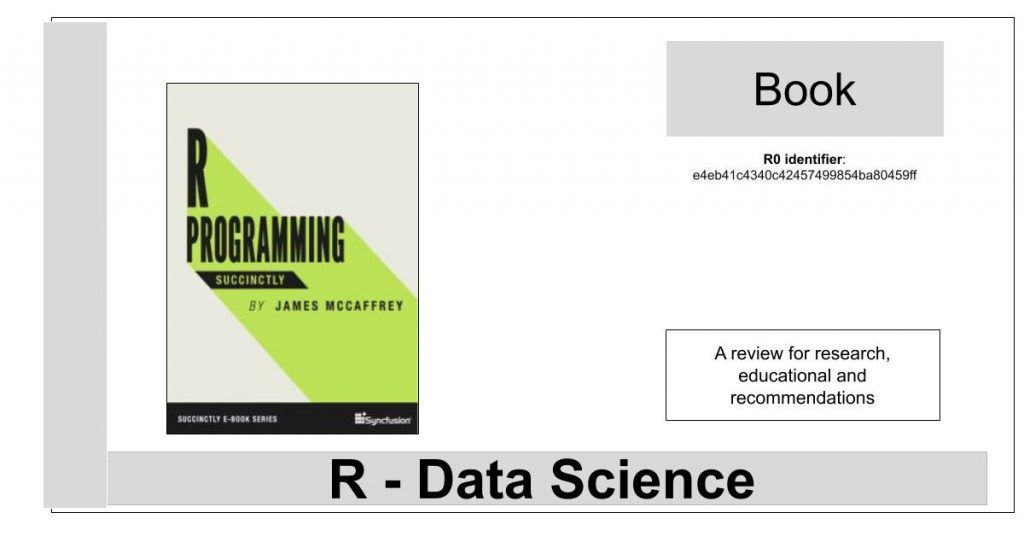
R Programming Succinctly

The R programming language on its own is a powerful tool that can perform thousands of statistical tasks, but by writing programs in R, you gain tremendous power and flexibility to extend its base functionality. Senior Succinctly series author and editor James McCaffrey shows you how in R Programming Succinctly.

https://editorialia.com/wp-content/uploads/2020/06/scala-succinctly.jpg

Scala Succinctly

Chris Rose guides readers through the basics of Scala, from installation to syntax shorthand, so that they can get up and running quickly.