Data Mining (Article)
Best Practices in Dataviz: An R Perspective
By the end of this you will have had a whirlwind tour of the very tip of the data visualization best-practices iceberg. We will go over a broad range of topics generally applicable to data science usecases but not dive too deep into any single one. One thing to keep in mind the whole time is none of this is absolutely set in stone, most often in the real world you have to bend or break some of these rules to do what you want.
The European Data Protection Supervisor, 2019 Annual Report a year of transition
With new legislation on data protection in the EU now in place, our greatest challenge moving into 2020 is to ensure that this legislation produces the promised results. This includes ensuring that new rules on ePrivacy remain firmly on the EU agenda. Awareness of the issues surrounding data protection and privacy and the importance of rotecting these fundamental rights is at an all time high and we cannot allow this momentum to decline.
Data Structures Succinctly Part 2
Data Structures Succinctly Part 2 is your concise guide to skip lists, hash tables, heaps, priority queues, AVL trees, and B-trees. As with the first book, you’ll learn how the structures behave, how to interact with them, and their performance limitations. Starting with skip lists and hash tables, and then moving to complex AVL trees and B-trees, author Robert Horvick explains what each structure’s methods and classes are, the algorithms behind them, and what is necessary to keep them valid.
Data Structures Succinctly Part 1
Data Structures Succinctly Part 1 is your first step to a better understanding of the different types of data structures, how they behave, and how to interact with them. Starting with simple linked lists and arrays, and then moving to more complex structures like binary search trees and sets, author Robert Horvick explains what each structure’s methods and classes are and the algorithms behind them. Horvick goes a step further to detail their operational and resource complexity, ensuring that you have a clear understanding of what using a specific data structure entails.
Advanced R
Advanced R helps you understand how R works at a fundamental level. It is designed for R programmers who want to deepen their understanding of the language, and programmers experienced in other languages who want to understand what makes R different and special. This book will teach you the foundations of R; three fundamental programming paradigms (functional, object-oriented, and metaprogramming); and powerful techniques for debugging and optimising your code.
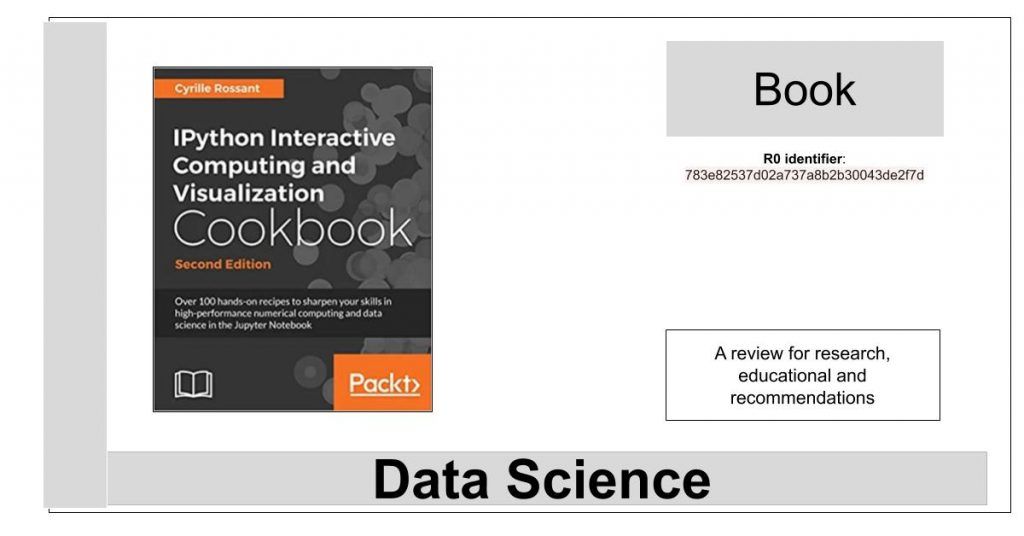
IPython Interactive Computing and Visualization Cookbook
IPython Interactive Computing and Visualization Cookbook, Second Edition contains many ready-to-use, focused recipes for high-performance scientific computing and data analysis, from the latest IPython/Jupyter features to the most advanced tricks, to help you write better and faster code.
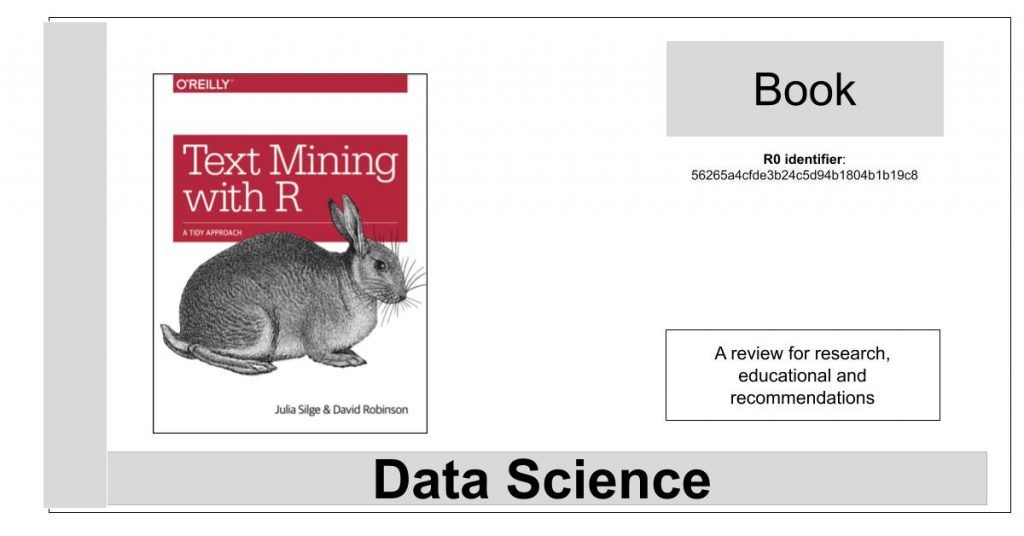
Text Mining with R (A Tidy Approach)
If you work in analytics or data science, like we do, you are familiar with the fact that data is being generated all the time at ever faster rates. (You may even be a little weary of people pontificating about this fact.) Analysts are often trained to handle tabular or rectangular data that is mostly numeric, but much of the data proliferating today is unstructured and text-heavy. Many of us who work in analytical fields are not trained in even simple interpretation of natural language.
We developed the tidytext (Silge and Robinson 2016) R package because we were familiar with many methods for data wrangling and visualization, but couldn’t easily apply these same methods to text.