News

https://editorialia.com/wp-content/uploads/2020/06/the-state-of-a-ethics-report-june-2020.jpg

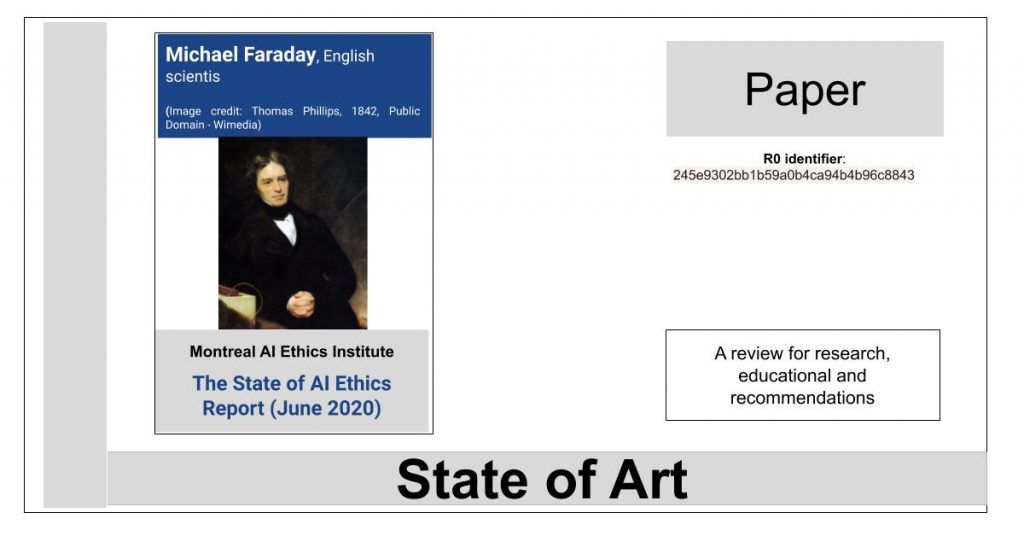
The State of AI Ethics Report (June 2020)

It has never been more important that we keep a sharp eye out on the development of this field and how it is shaping our society and interactions with each other. With this inaugural edition of the State of AI Ethics we hope to bring forward the most important developments that caught our attention at the Montreal AI Ethics Institute this past quarter. Our goal is to help you navigate this ever-evolving field swiftly and allow you and your organization to make informed decisions.

https://editorialia.com/wp-content/uploads/2020/06/openmined-opensource-to-make-privacy-preserving-of-ai-technologies.jpg

OpenMined: open source to make privacy-preserving of AI technologies

With OpenMined, an AI model can be governed by multiple owners and trained securely on an unseen, distributed dataset.The mission of the OpenMined community is to create an accessible ecosystem of tools for private, secure, multi-owner governed AI

https://editorialia.com/wp-content/uploads/2020/06/toolkit-for-healthcare-imaging.jpg

Medical Open Network for AI (MONAI), AI Toolkit for Healthcare Imaging

The MONAI framework is the open-source foundation being created by Project MONAI. MONAI is a freely available, community-supported, PyTorch-based framework for deep learning in healthcare imaging. It provides domain-optimized foundational capabilities for developing healthcare imaging training workflows in a native PyTorch paradigm.

https://editorialia.com/wp-content/uploads/2020/06/privacy-preserving-ai.jpg

Privacy Preserving AI – Andrew Trask, OpenMined

Learn the basics of secure and private AI techniques, including federated learning and secure multi-party computation. In this talk, Andrew Trask of OpenMined highlights the importance of privacy preserving machine learning, and how to use privacy-focused tools like PySyft.

https://editorialia.com/wp-content/uploads/2020/06/response-to-the-european-commissione28099s-white-paper-on-ai.jpg

Montreal AI Ethics Institute: Response to the European Commission’s white paper on AI

In February 2020, the European Commission (EC) published a white paper entitled, On Artificial Intelligence – A European approach to excellence and trust. This paper outlines the EC’s policy options for the promotion and adoption of artificial intelligence (AI) in the European Union. We reviewed this paper and published a response addressing the EC’s plans to build an “ecosystem of excellence” and an “ecosystem of trust,” as well as the safety and liability implications of AI, the internet of things (IoT), and robotics.

https://editorialia.com/wp-content/uploads/2020/06/a-rigorous-analysis-of-selfe28090adaptation-in-discrete-evolutionary-algorithms.jpg

A Rigorous Analysis of Self‐Adaptation in Discrete Evolutionary Algorithms

A key challenge to making effective use of evolutionary algorithms (EAs) is to choose appropriate settings for their parameters. However, the appropriate parameter setting generally depends on the structure of the optimization problem, which is often unknown to the user. Non‐deterministic parameter control mechanisms adjust parameters using information obtained from the evolutionary process.

https://editorialia.com/wp-content/uploads/2020/06/cover-interpretable-machine-learning-1.jpg

Interpretable Machine Learning (A Guide for Making Black Box Models Explainable)

The book focuses on machine learning models for tabular data (also called relational or structured data) and less on computer vision and natural language processing tasks. Reading the book is recommended for machine learning practitioners, data scientists, statisticians, and anyone else interested in making machine learning models interpretable.

https://editorialia.com/wp-content/uploads/2020/06/unconventional-computer-arithmetic-for-emerging-applications-and-technologies.jpg

Unconventional Computer Arithmetic for Emerging Applications and Technologies

Arithmetic plays a major role in computing performance and efficiency. It is challenging to build platforms, ranging from embedded devices to high performance computers, supported on traditional binary arithmetic and silicon-based technologies that meet the requirements of today’s applications. In this talk, the state-of-the-art of non-conventional computer arithmetic is presented, considering alternative computing models and emerging technologies.

https://editorialia.com/wp-content/uploads/2020/06/digital-health-and-the-fight-against-the-covid-19-pandemic.jpg

Digital Health And The Fight Against The COVID-19 Pandemic

You will find up-to-date, reliable information about the latest innovations, technologies, and trends in the context of COVID-19, and the best examples of 14 digital health technologies already sent to the battle successfully

https://editorialia.com/wp-content/uploads/2020/06/covid-19-and-contact-tracing-.jpg

Covid-19 and contact tracing apps

Multi-presenter format with exciting Speakers from the current European ICT research projects AI4EU (www.ai4eu.eu) and Helios (helios-social.com/) as well as Guest Speakers.