Clase (Paper)

https://editorialia.com/wp-content/uploads/2020/04/e74ee944-e7de-480c-9b60-665e97c78261.png

Encrypted Traffic Analysis

This report explores the current state of affairs in Encrypted Traffic Analysis and in particular discusses research and methods in 6 key use cases; viz. application identification, network analytics, user information identification, detection of encrypted malware, file/device/website/location fingerprinting and DNS tunnelling detection.

https://editorialia.com/wp-content/uploads/2020/04/cmglee_cambridge_science_festival_2015_da_vinci.jpg

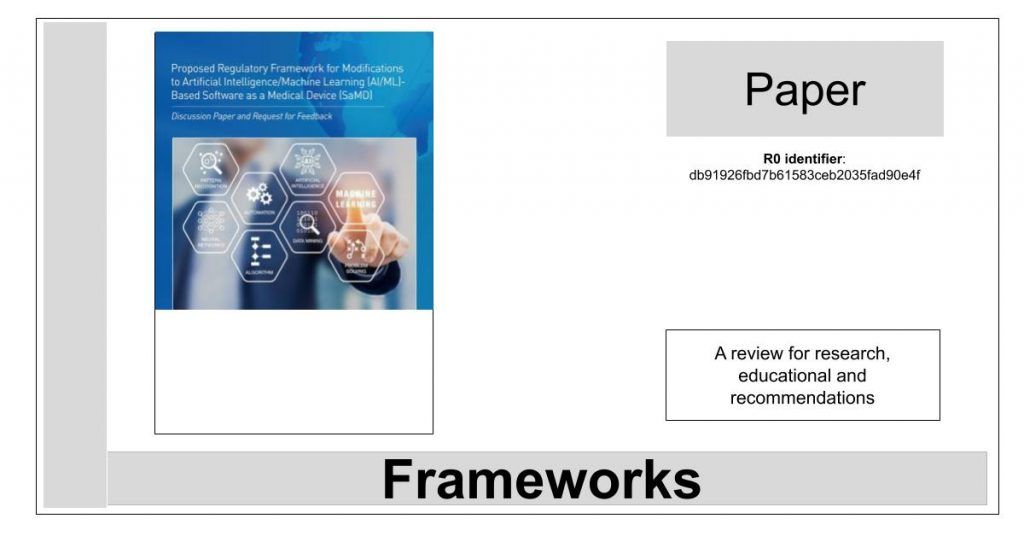
The need for a system view to regulate artificial intelligence/machine learning-based software as medical device

FDA need to widen their scope from evaluating medical AI/ML-based products to assessing systems. This shift in perspective—from a product view to a system view—is central to maximizing the safety and efficacy of AI/ML in health care, but it also poses significant challenges for agencies like the FDA who are used to regulating products, not systems. We offer several suggestions for regulators to make this challenging but important transition

https://editorialia.com/wp-content/uploads/2020/04/defining-artificial-intelligence.jpg

Defining Artificial Intelligence |🇪🇸 Definiendo Inteligencia Artificial

The starting point to develop the operational definition is the definition of AI adopted by the High Level Expert Group on artificial intelligence. To derive this operational definition we have followed a mixed methodology. On one hand, we apply natural language processing methods to a large set of AI literature. On the other hand, we carry out a qualitative analysis on 55 key documents including artificial intelligence definitions from three complementary perspectives: policy, research and industry.

https://editorialia.com/wp-content/uploads/2020/03/mathematics-for-machine-learning.png

Mathematics for Machine Learning

Machine learning uses tools from a variety of mathematical fields. This document is an attempt to provide a summary of the mathematical background needed.

https://editorialia.com/wp-content/uploads/2020/02/designers-need-to-prevent-the-failures-from-excessive-automation-and-excessive-human-control.png

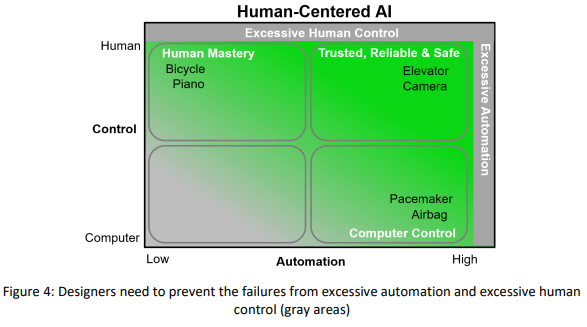
Inteligencia artificial centrada en el ser humano: confiable y segura

El objetivo de este documento es alentar a los investigadores de inteligencia artificial y diseñadores de productos a cambiar del pensamiento unidimensional sobre los niveles de automatización / autonomía a un nuevo marco HCAI bidimensional.

https://editorialia.com/wp-content/uploads/2020/02/image-7.png

Machine learning in Python: the top programming language

Phyton’s most notable points are:
-Is a great library ecosystem (Scikit-learn, Pandas, Matplotlib, NLTK, Scikit-image, PyBrain, Caffe, StatsModels, TensorFlow, Keras, etc).
-Growing popularity.
-Has a low entry barrier, has flexibility, is a platform independence, has readability, good visualization options, good community support and growing popularity.

WHITE PAPER On Artificial Intelligence – A European approach to excellence and trust

The purpose of this White Paper is to set out policy options on how to achieve these objectives. It does not address the development and use of AI for military purposes.The Commission invites Member States, other European institutions, and all stakeholders, including industry, social partners, civil society organisations, researchers, the public in general and any interested party, to react to the options and to contribute to the Commission’s future decision-making in this domain.

Cognitive Anthropomorphism of AI: How Humans and Computers Classify Images

Modern AI image classifiers have made impressive advances in recent years, but their performance often appears strange or violates expectations of users. This suggests humans engage in cognitive anthropomorphism: expecting AI to have the same nature as human intelligence. This mismatch presents an obstacle to appropriate human-AI interaction.