Advanced

https://editorialia.com/wp-content/uploads/2020/04/pan-euhackathon.jpg

EUvsVirus, a pan-European hackathon: When? 24, 25 and 26 April

The European Commission, in close collaboration with EU member states, will host a pan-European hackathon to connect civil society, innovators, partners and buyers across Europe to develop innovative solutions to overcome coronavirus-related challenges.

https://editorialia.com/wp-content/uploads/2020/06/advanced-r.jpg

Advanced R

Advanced R helps you understand how R works at a fundamental level. It is designed for R programmers who want to deepen their understanding of the language, and programmers experienced in other languages who want to understand what makes R different and special. This book will teach you the foundations of R; three fundamental programming paradigms (functional, object-oriented, and metaprogramming); and powerful techniques for debugging and optimising your code.

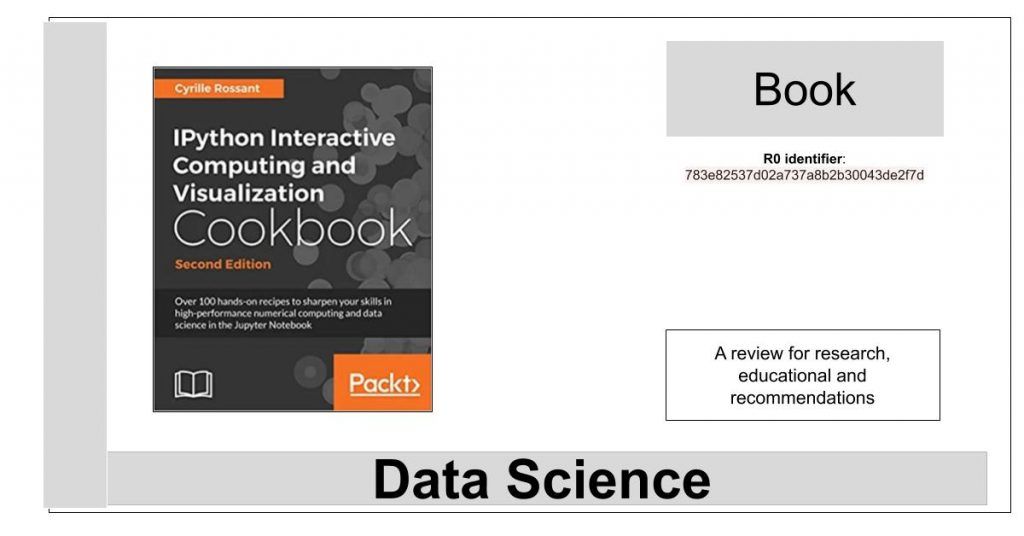
https://editorialia.com/wp-content/uploads/2020/06/ipython_interactive_computing_and_visualization_cookbook.jpg

IPython Interactive Computing and Visualization Cookbook

IPython Interactive Computing and Visualization Cookbook, Second Edition contains many ready-to-use, focused recipes for high-performance scientific computing and data analysis, from the latest IPython/Jupyter features to the most advanced tricks, to help you write better and faster code.

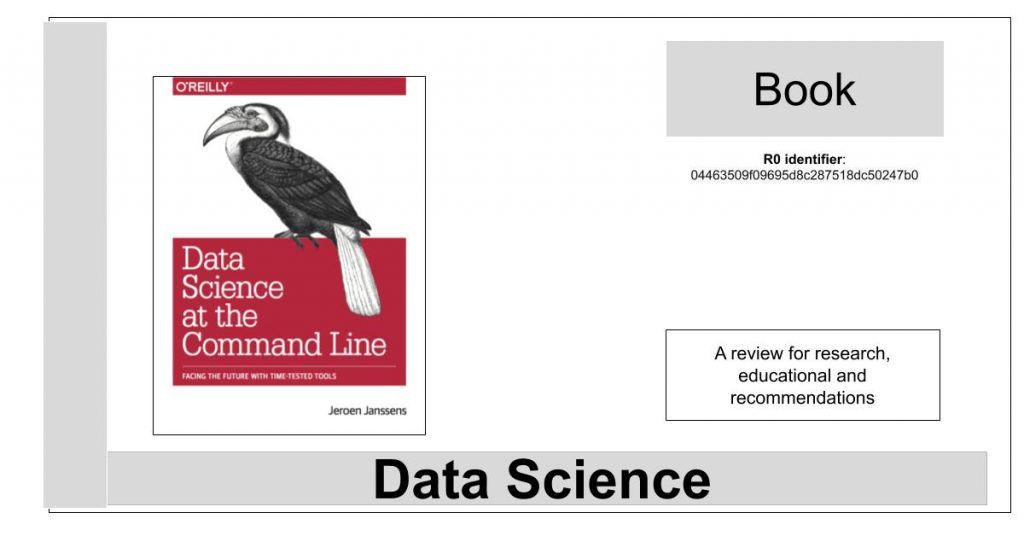
https://editorialia.com/wp-content/uploads/2020/06/data-science-at-the-command-line.jpg

Data Science at the Command Line

Today, data scientists can choose from an overwhelming collection of exciting technologies and programming languages. Python, R, Hadoop, Julia, Pig, Hive, and Spark are but a few examples. You may already have experience in one or more of these. If so, then why should you still care about the command line for doing data science? What does the command line have to offer that these other technologies and programming languages do not?

https://editorialia.com/wp-content/uploads/2020/03/stanza2-2.png

Stanza – una biblioteca de Python NLP para muchos idiomas humanos

El diseño del kit de herramientas permite trabajar en paralelo entre más de 70 idiomas, utilizando el formalismo de Dependencias Universales. Stanza está construido con componentes de red neuronal de alta precisión, que también permiten una capacitación y evaluación eficientes con sus propios datos anotados.

https://editorialia.com/wp-content/uploads/2020/03/algorithms-notes-for-professionals.png

Algorithms Notes for Professionals

Algorithms Notes for Professionals book is compiled from Stack Overflow Documentation. (252 pages, published on May 2018)

https://editorialia.com/wp-content/uploads/2020/06/keras-succinctly.jpg

Keras Succinctly

Neural networks are a powerful tool for developers, but harnessing them can be a challenge. With Keras Succinctly, author James McCaffrey introduces Keras, an open-source, neural network library designed specifically to make working with backend neural network tools easier.

https://editorialia.com/wp-content/uploads/2020/06/efficient-r-programming.jpg

Efficient R programming

There are many excellent R resources for visualization, data science, and package development. Hundreds of scattered vignettes, web pages, and forums explain how to use R in particular domains. But little has been written on how to simply make R work effectively-until now.

https://editorialia.com/wp-content/uploads/2020/02/logo-tpot.jpg

TPOT is a Python Automated Machine Learning tool

Consider TPOT your Data Science Assistant. TPOT is a Python Automated Machine Learning (AutoML) tool that optimizes machine learning pipelines using genetic programming.

https://editorialia.com/wp-content/uploads/2020/02/scikit-learn.jpg

Scikit-Learn

Scikit-Learn Tutorial (Materials for my scikit-learn tutorial)
By Jake VanderPlas who is the director of Open Software at the University of Washington’s eScience institute, and researches and teaches in a variety of areas, including Astronomy, Astrostatistics, Machine Learning, and Scalable Computation.