Numbered

https://editorialia.com/wp-content/uploads/2020/03/statistics-fundamentals-succinctly.jpg

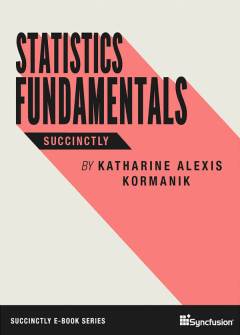
Statistics Fundamentals Succinctly

Statistics is the foundation of intelligent data analysis. Statistics Fundamentals Succinctly by Katie Kormanik provides the foundational bricks and mortar needed to master the theories and methodologies behind statistical procedures. In less than 100 pages, you’ll understand how to better gather and interpret all the information at your fingertips.

https://editorialia.com/wp-content/uploads/2020/06/advanced-r.jpg

Advanced R

Advanced R helps you understand how R works at a fundamental level. It is designed for R programmers who want to deepen their understanding of the language, and programmers experienced in other languages who want to understand what makes R different and special. This book will teach you the foundations of R; three fundamental programming paradigms (functional, object-oriented, and metaprogramming); and powerful techniques for debugging and optimising your code.

https://editorialia.com/wp-content/uploads/2020/06/ipython_interactive_computing_and_visualization_cookbook.jpg

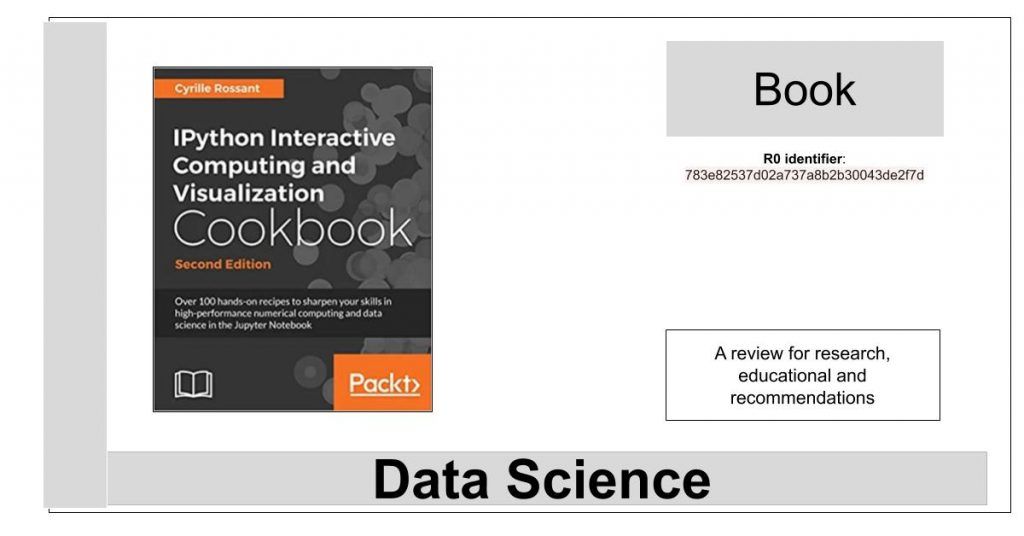
IPython Interactive Computing and Visualization Cookbook

IPython Interactive Computing and Visualization Cookbook, Second Edition contains many ready-to-use, focused recipes for high-performance scientific computing and data analysis, from the latest IPython/Jupyter features to the most advanced tricks, to help you write better and faster code.

https://editorialia.com/wp-content/uploads/2020/04/artificial-intelligence-foundations-of-computational-agents.jpg

Artificial Intelligence: Foundations of Computational Agents

It presents artificial intelligence as the study of the design of intelligent computational agents. The book is structured as a textbook, but it is accessible to a wide audience of professionals and researchers. In the last decades we have witnessed the emergence of artificial intelligence as a serious science and engineering discipline. This book provides an accessible synthesis of the field aimed at undergraduate and graduate students. It provides a coherent vision of the foundations of the field as it is today. It aims to provide that synthesis as an integrated science, in terms of a multi-dimensional design space that has been partially explored. As with any science worth its salt, artificial intelligence has a coherent, formal theory and a rambunctious experimental wing. The book balances theory and experiment, showing how to link them intimately together. It develops the science of AI together with its engineering applications.

https://editorialia.com/wp-content/uploads/2020/03/text_mining_with_r-_a_tidy_approach.jpg

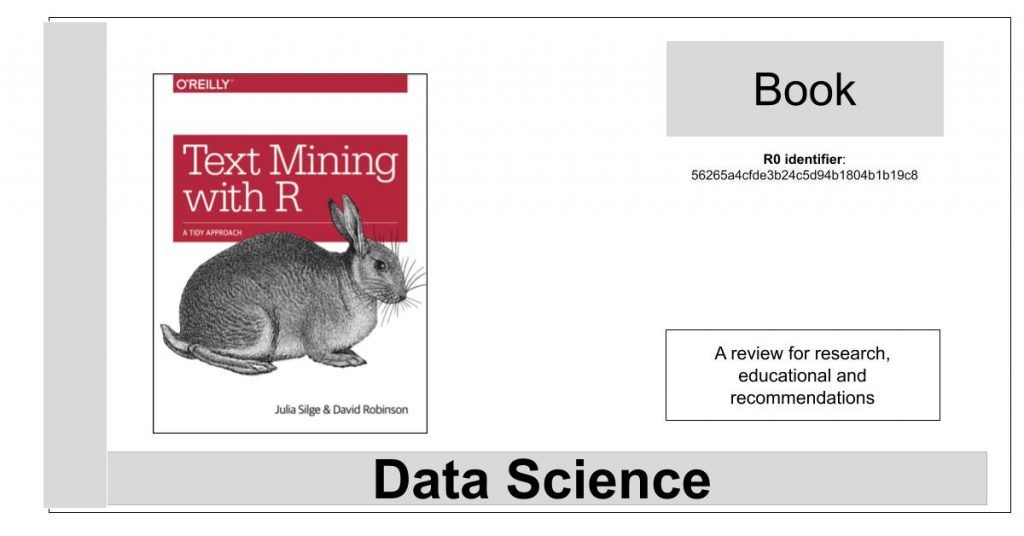
Text Mining with R (A Tidy Approach)

If you work in analytics or data science, like we do, you are familiar with the fact that data is being generated all the time at ever faster rates. (You may even be a little weary of people pontificating about this fact.) Analysts are often trained to handle tabular or rectangular data that is mostly numeric, but much of the data proliferating today is unstructured and text-heavy. Many of us who work in analytical fields are not trained in even simple interpretation of natural language.

We developed the tidytext (Silge and Robinson 2016) R package because we were familiar with many methods for data wrangling and visualization, but couldn’t easily apply these same methods to text.

https://editorialia.com/wp-content/uploads/2020/06/data-science-at-the-command-line.jpg

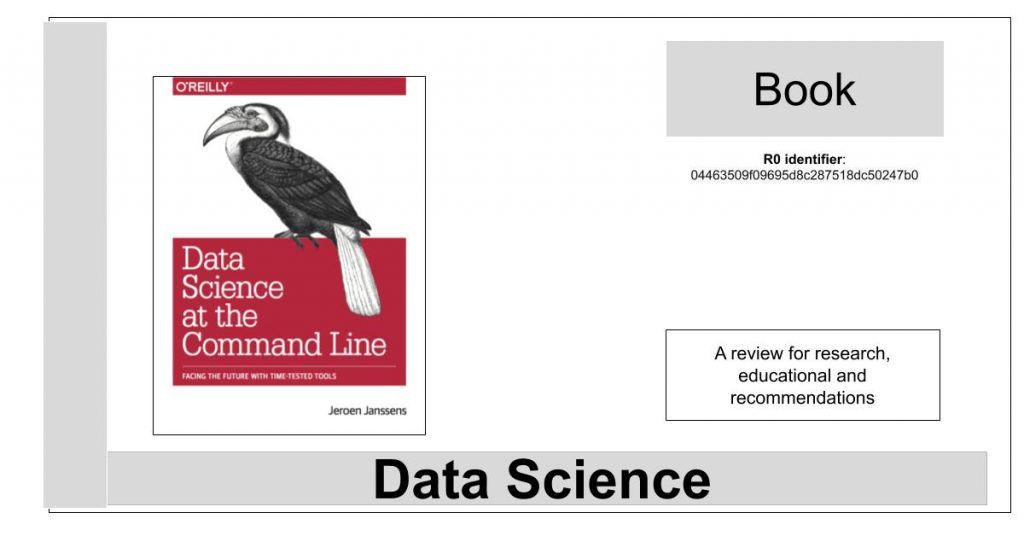
Data Science at the Command Line

Today, data scientists can choose from an overwhelming collection of exciting technologies and programming languages. Python, R, Hadoop, Julia, Pig, Hive, and Spark are but a few examples. You may already have experience in one or more of these. If so, then why should you still care about the command line for doing data science? What does the command line have to offer that these other technologies and programming languages do not?

https://editorialia.com/wp-content/uploads/2020/06/r-packages.jpg

R Packages

Packages are the fundamental units of reproducible R code. They include reusable R functions, the documentation that describes how to use them, and sample data. In this book you’ll learn how to turn your code into packages that others can easily download and use. Writing a package can seem overwhelming at first. So start with the basics and improve it over time. It doesn’t matter if your first version isn’t perfect as long as the next version is better. This is where we are developing the 2nd edition of this book.

https://editorialia.com/wp-content/uploads/2020/03/writing-native-mobile-apps-in-a-functional-language-succinctly.png

Writing Native Mobile Apps in a Functional Language Succinctly

In Implementing a Custom Language Succinctly, Succinctly series author Vassili Kaplan demonstrated how to create a customized programming language. Now, he returns to showcase how you can use that language to build fully functional mobile apps. In Writing Native Mobile Apps in a Functional Language Succinctly, you will build off the skills you’ve already developed to begin creating applications that you can put to immediate use.

https://editorialia.com/wp-content/uploads/2020/06/r-programming-succinctly.jpg

R Programming Succinctly

The R programming language on its own is a powerful tool that can perform thousands of statistical tasks, but by writing programs in R, you gain tremendous power and flexibility to extend its base functionality. Senior Succinctly series author and editor James McCaffrey shows you how in R Programming Succinctly.

https://editorialia.com/wp-content/uploads/2020/03/business-process-flow-mapping-succinctly.png

Business Process Flow Mapping Succinctly

In a company, when the business process is defined, employees feel confident in their roles. They understand expectations and can easily identify when something is amiss or requires escalation. In Business Process Flow Mapping Succinctly, Erica Quigley will show you the activities that should occur in order to completely define a business process so you can identify and rectify gaps in communication, procedures, and teams. You will also learn a simple way to document the process so the project team working with you can feel confident in what they are being asked to execute.