Open Access

Ciencia Abierta

https://editorialia.com/wp-content/uploads/2020/06/will-the-fashion-industry-survive-without-ai_.jpg

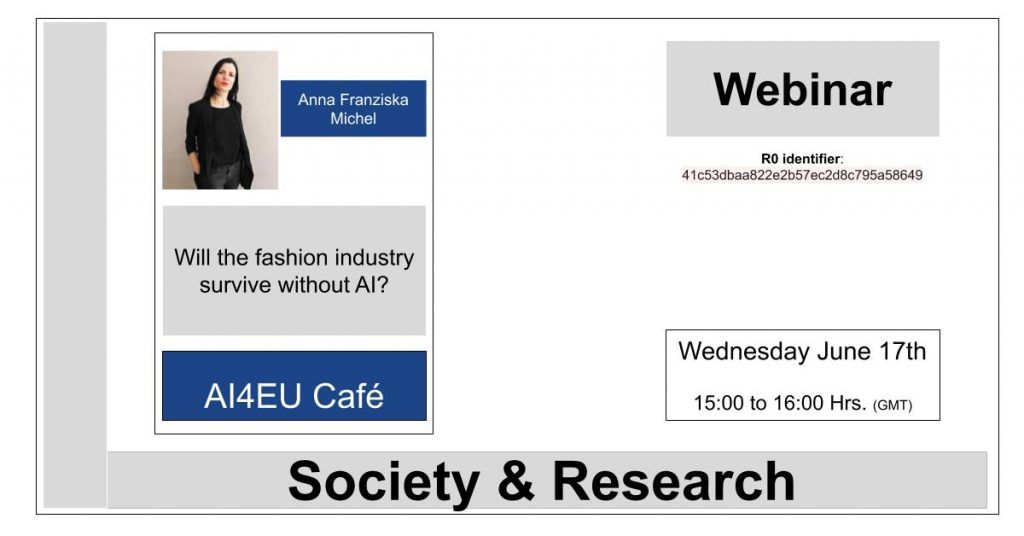
Will the fashion industry survive without AI?

Yooneeque has made digitalisation its motto. An artificial intelligence called YOONA is the fashion designer here. This time again during the Berlin Fashion Week the latest outputs of the software were presented

https://editorialia.com/wp-content/uploads/2020/06/the-art-of-machine-learning-algorithms-data-r.jpg

The Art of Machine Learning (Algorithms + Data + R)

I wrote this book because: • ML is not a recipe. It is not a matter of knowing the syntax and mechanics of various software packages.• ML is an art, not a science. (Hence the title of this book). • One does not have to be a math whiz or know advanced math in orer to use ML effectively, but one does need to understand the concepts well — the Why? and How? of ML methods

https://editorialia.com/wp-content/uploads/2020/06/microsoft-nlp-best-practices.jpg

Microsoft NLP Best Practices

This repository contains examples and best practices for building NLP systems, provided as Jupyter notebooks and utility functions. The focus of the repository is on state-of-the-art methods and common scenarios that are popular among researchers and practitioners working on problems involving text and language

https://editorialia.com/wp-content/uploads/2020/06/the-super-duper-nlp-repo-the-big-bad-nlp-database.jpg

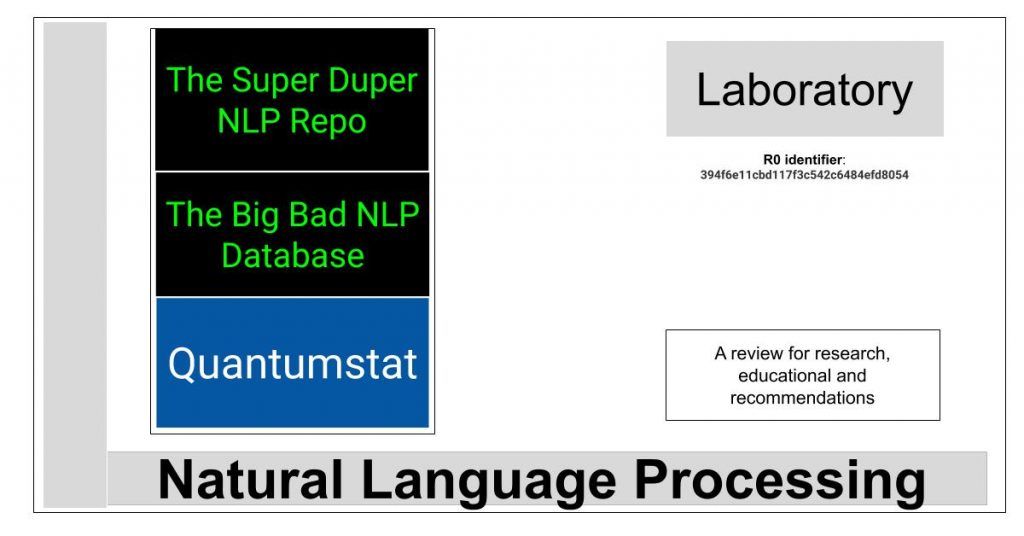
The Super Duper NLP Repo & The Big Bad NLP Database

A database housing more than 100 Colab notebooks running ML code for various NLP tasks. Colab is an excellent destination to experiment with the latest models as it comes with a free GPU/TPU housed in Google’s back-end servers… And a collection of more than 400 NLP datasets that it include papers.

https://editorialia.com/wp-content/uploads/2020/06/trainings-for-cybersecurity-specialists-1.jpg

Trainings for Cybersecurity Specialists

“ENISA CSIRT training material was introduced in 2008. In 2012, 2013 and 2014 it was complemented with new exercise scenarios containing essential material for success in the CSIRT community and in the field of information security. In these pages you will find the ENISA CSIRT training material, containing Handbooks for teachers, Toolsets for students and Virtual Images to support hands on training sessions. ” The materials continue to be updated in 2020 and are appropriate for use by cybersecurity specialists and decision-makers.

https://editorialia.com/wp-content/uploads/2020/06/best-practives-in-dataviz_-an-r-perspective.jpg

Best Practices in Dataviz: An R Perspective

By the end of this you will have had a whirlwind tour of the very tip of the data visualization best-practices iceberg. We will go over a broad range of topics generally applicable to data science usecases but not dive too deep into any single one. One thing to keep in mind the whole time is none of this is absolutely set in stone, most often in the real world you have to bend or break some of these rules to do what you want.

https://editorialia.com/wp-content/uploads/2020/06/the-virtual-humans-factory.jpg

The Virtual Humans Factory

Harnessing the power of supercomputer and patient modelling to deliver unparallelled medical insights and predict treatment outcomes for patients.

https://editorialia.com/wp-content/uploads/2020/06/machine-learning-for-medical-imaging-analysis-demystified_v5.jpg

Machine Learning for Medical Imaging Analysis Demystified

This lecture will outline the fundamental ML processes involved in medical image analysis. Achieving prediction and classification for CAD applications will also be discussed. Some preliminary ideas of 3D reconstruction and viewing as applied in medical image analysis will also be presented.

https://editorialia.com/wp-content/uploads/2020/06/guideline-for-ai-for-medical-products.jpg

Guideline for AI for medical products

The objective of this guideline is to provide medical device manufacturers and notified bodies instructions and to provide them with a concrete checklist to understand what the expectations of the notified bodies are, to promote step-by-step implementation of safety of medical devices, that implement artificial intelligence methods, in particular machine learning, to compensate for the lack of a harmonized standard (in the interim) to the greatest extent possible.