
Python® Notes for Professionals book
This Python® Notes for Professionals book is compiled from Stack Overflow Documentation. (816 pages, published on June 2018)
Publicación sobre Inteligencia Artificial
This Python® Notes for Professionals book is compiled from Stack Overflow Documentation. (816 pages, published on June 2018)

Modern AI image classifiers have made impressive advances in recent years, but their performance often appears strange or violates expectations of users. This suggests humans engage in cognitive anthropomorphism: expecting AI to have the same nature as human intelligence. This mismatch presents an obstacle to appropriate human-AI interaction.
Cognitive Anthropomorphism of AI: How Humans and Computers Classify Images Leer más »

A comprehensive introduction to the latest forecasting methods. Examples use R with many data sets taken from the authors’ own consulting experience. In this second edition, all chapters have been updated to cover the latest research, and three new chapters have been added on dynamic regression forecasting, hierarchical forecasting and practical forecasting issues.
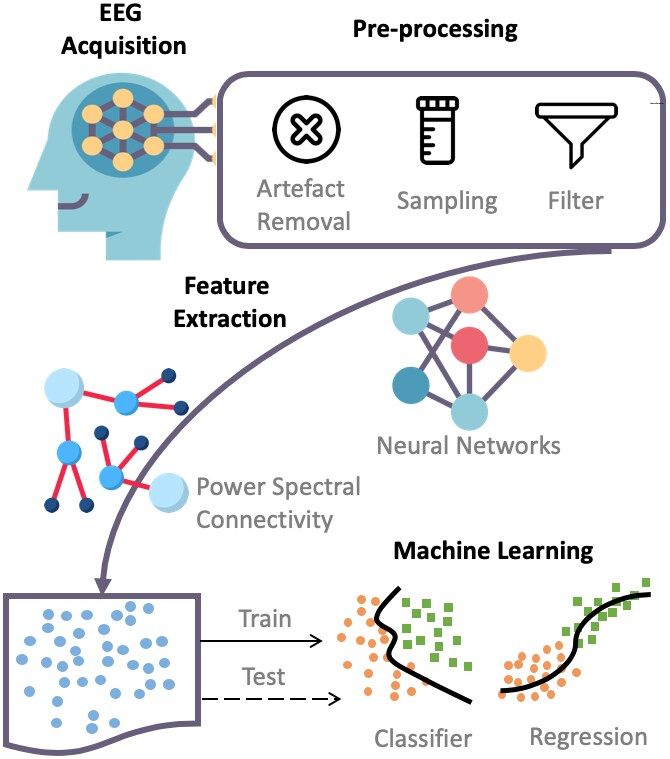
Recent technological advances such as wearable sensing devices, real-time data streaming, machine learning, and deep learning approaches have increased interest in electroencephalographic (EEG) based BCI for translational and healthcare applications.
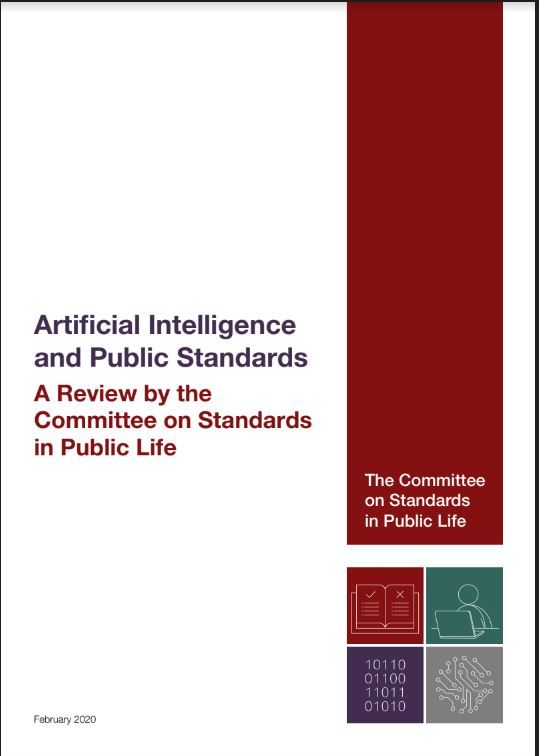
The Committee on Standards in Public Life Published (10 February 2020 ) its report and recommendations to the Prime Minister to ensure that high standards of conduct are upheld as technologically assisted decision making is adopted more widely across the public sector. (GOV.UK).

Turing Natural Language Generation (T-NLG) is a 17 billion parameter language model by Microsoft that outperforms the state of the art on many downstream NLP tasks. We present a demo of the model, including its freeform generation, question answering, and summarization capabilities, to academics for feedback and research purposes.
Turing-NLG: A 17-billion-parameter language model by Microsoft Leer más »

Cybersecurity attacks are growing both in frequency and sophistication over the years. This increasing sophistication and complexity call for more advancement and continuous innovation in defensive strategies. Traditional methods of intrusion detection and deep packet inspection, while still largely used
and recommended, are no longer sufficient to meet the demands of growing security threats.
Cyber Attack Detection thanks to Machine Learning Algorithms Leer más »
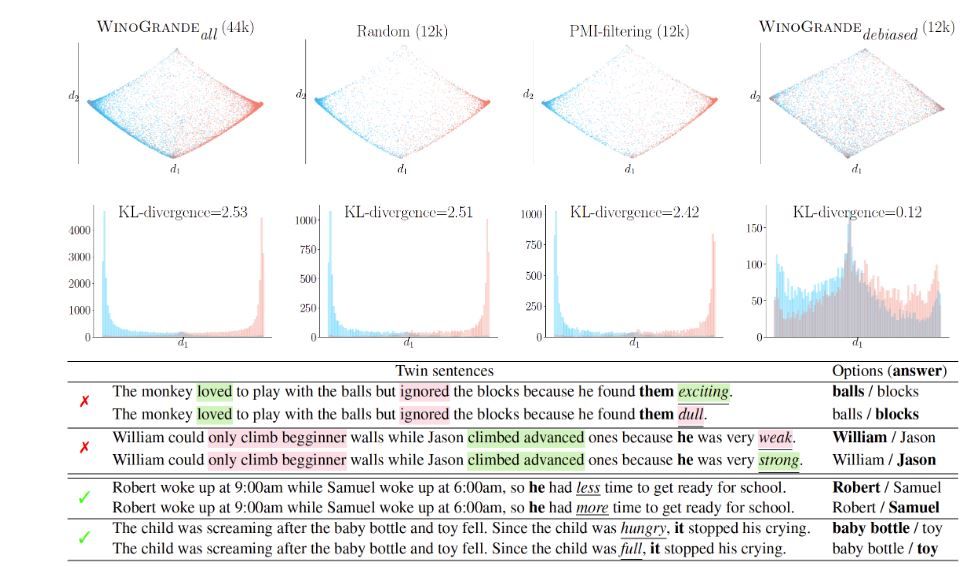
An article by the Allen Institute of Artificial Intelligence highlights a pending issue: machines do not really understand what humans write or read.
‘WinoGrande: An Adversarial Winograd Schema Challenge at Scale’ Leer más »

Discussed the phenomenalprogress over the last decade in the engineering of superconducting devices, the development of high-fidelitygate operations, and quantum non-demolition measurements with high signal to noise ratio.
A quantum engineer’s guide to superconducting qubits Leer más »

The Deep Learning textbook is a resource intended to help students and practitioners enter the field of machine learning in general and deep learning in particular. The online version of the book is now complete and will remain available online for free. (“Written by three experts in the field, Deep Learning is the only comprehensive book on the subject.” ―Elon Musk, cochair of OpenAI; cofounder and CEO of Tesla and SpaceX).