Open Access

Ciencia Abierta

Artificial Intelligence in Society

Artificial Intelligence in Society

«The artificial intelligence (AI) landscape has evolved significantly from 1950 when Alan Turing first posed the question of whether machines can think. Today, AI is transforming societies and economies. It promises to generate productivity gains, improve well-being and help address global challenges, such as climate change, resource scarcity and health crises. Yet, as AI applications are adopted around the world, their use can raise questions and challenges related to human values, fairness, human determination, privacy, safety and accountability, among others. This report helps build a shared understanding of AI in the present and near-term by mapping the AI technical, economic, use case and policy landscape and identifying major public policy considerations. It is also intended to help co-ordination and consistency with discussions in other national and international fora». (OECD)

Artificial Intelligence in Society Leer más »

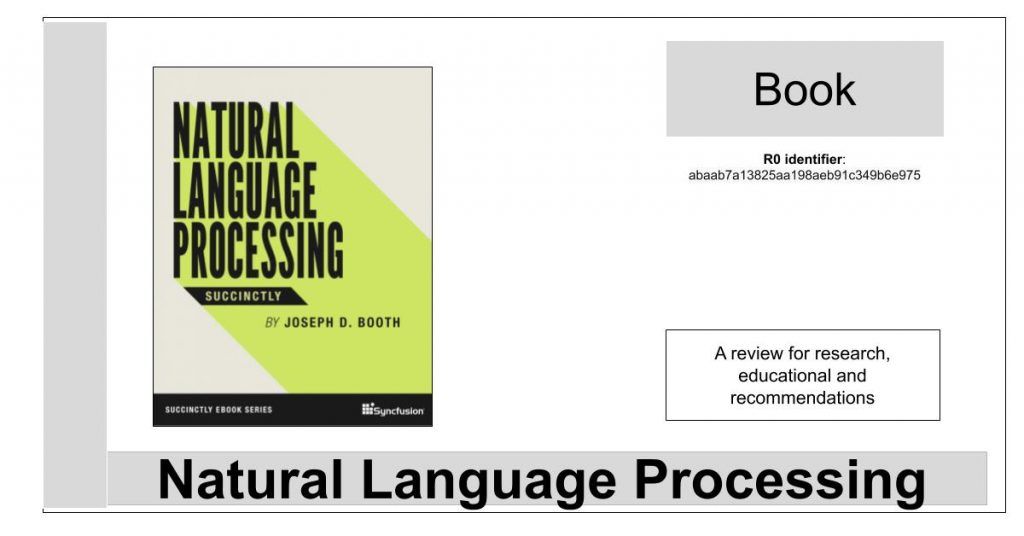
Natural Language Processing Succinctly

Natural Language Processing Succinctly

AI assistants represent a significant frontier for development. But the complexities of such systems pose a significant barrier for developers. In Natural Language Processing Succinctly, author Joseph Booth will guide readers through designing a simple system that can interpret and provide reasonable responses to written English text. With this foundation, readers will be prepared to tackle the greater challenges of natural language development. (Syncfusion).

Natural Language Processing Succinctly Leer más »

Learning Scala Language

Learning Scala Language

Learning Scala Language eBook. (Stack Overflow Documentation).

Scala is a modern multi-paradigm programming language designed to express common programming patterns in a concise, elegant, and type-safe way. It smoothly integrates features of object-oriented and functional languages.

Learning Scala Language Leer más »

Python Data Science Handbook (Essential Tools for Working with Data)

Python Data Science Handbook (Essential Tools for Working with Data)

For many researchers, Python is a first-class tool mainly because of its libraries for storing, manipulating, and gaining insight from data. Several resources exist for individual pieces of this data science stack, but only with the Python Data Science Handbook do you get them all—IPython, NumPy, Pandas, Matplotlib, Scikit-Learn, and other related tools.

Python Data Science Handbook (Essential Tools for Working with Data) Leer más »