The Bible of AI

Martin Davis and the Logic of a Checkable Plan

Martin Davis and the Logic of a Checkable Plan

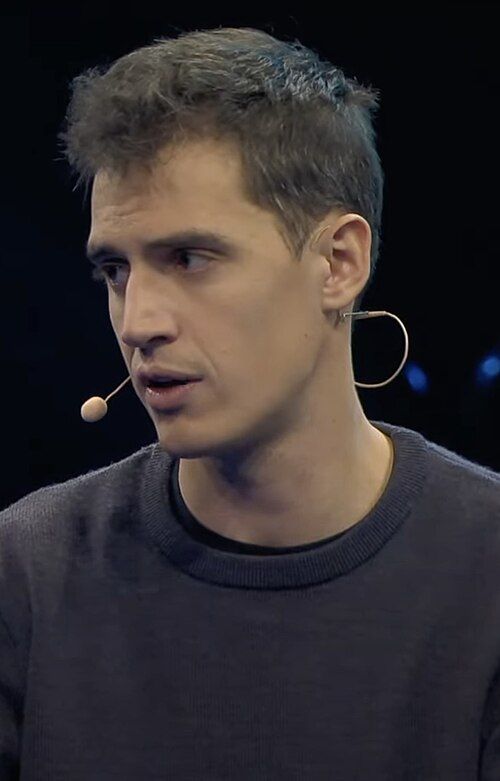
Martin Davis spent much of his life asking which questions a machine could settle. As a student in New York, he took up a problem about equations that would occupy him for decades. In 1962 he and two colleagues described a machine that could pursue a line of reasoning, recognise a contradiction and retrieve an earlier decision from magnetic tape. That work helped establish a method for finding out whether a set of logical conditions can all hold at once. Decades later, researchers in artificial intelligence used that question to find plans. A sequence of actions had to lead from a stated starting point to a goal while obeying the rules at every step. Davis’s career offers a way to understand both the force of a proof and the care needed in deciding what, exactly, has been proved.

Martin Davis and the Logic of a Checkable Plan Leer más »

Graydon Hoare, Rust and the Broken Elevator

Graydon Hoare, Rust and the Broken Elevator

In 2006 a broken elevator left Graydon Hoare with a long walk up to his Vancouver apartment. Years later, the Canadian engineer recalled the climb when he wrote about Rust, the programming language he had begun in his spare time at Mozilla. An old annoyance helps explain what he wanted from software. The route from his first experiments to a language people could depend on ran through the work of many others. A browser engine gave the team somewhere to test its ideas. A promise of stability gave users a reason to commit. Today, one can follow that history into an unexpected place. Before a language model processes a sentence, a tool has to break the text into units the model recognises. At Hugging Face, one widely available tool for that job has its core in Rust.

Graydon Hoare, Rust and the Broken Elevator Leer más »

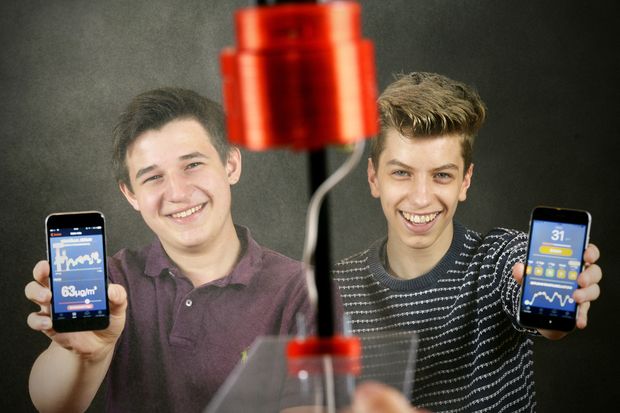
Max Hentges (left) and Leopold Aschenbrenner (right), Jugend forscht, 2016. © Stiftung Jugend forscht e. V.

Leopold Aschenbrenner and the Case for AGI by 2027

At fourteen, Leopold Aschenbrenner and a schoolmate built a system to measure fine particles in Berlin’s air. Eight years later, he published a forecast about machines that might soon do his own job. Between those projects came economics at Columbia, research on growth and catastrophic risk, and an experiment at OpenAI in which a weaker model helped train a stronger one. His June 2024 essay, Situational Awareness, asked what would happen if artificial intelligence could take over the work of an AI researcher. This profile follows that question into the laboratory, the electricity grid and the investment firm he helped bring into being. Evidence from 2026 gives different answers to different parts of his argument. Researchers have measured faster progress inside one laboratory. The prospect of a machine independently carrying a research programme from question to discovery remains open.

Leopold Aschenbrenner and the Case for AGI by 2027 Leer más »

Arthur Mensch and Mistral AI: what does it take to keep a model in European hands?

Arthur Mensch and Mistral AI: what does it take to keep a model in European hands?

An organisation may want to run a powerful model close to the people whose records it processes. Mistral offers one route: release weights that can be deployed under the customer’s control, and sell the infrastructure and expertise needed to operate them. Arthur Mensch’s French company gives Europe a stake in frontier research. Its training hardware and industrial shareholders show how international that undertaking remains.

Arthur Mensch and Mistral AI: what does it take to keep a model in European hands? Leer más »

Aravind Srinivas and Perplexity: who chooses the sources behind an answer?

Aravind Srinivas and Perplexity: who chooses the sources behind an answer?

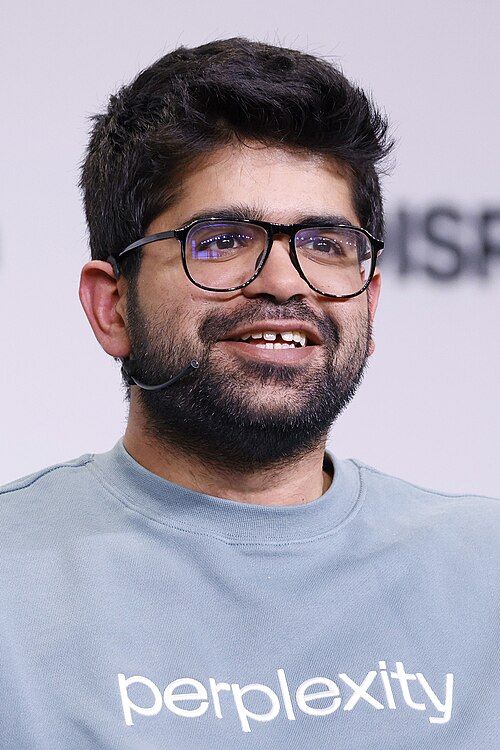
A list of blue links lets the reader choose which account to open. An answer engine makes that decision once before the reader gets there. Aravind Srinivas built Perplexity around that exchange. Its citations can make research faster, but the order of the sources, the passages the system leaves out and the model used to assemble them all shape what the reader takes away.

Aravind Srinivas and Perplexity: who chooses the sources behind an answer? Leer más »

Liang Wenfeng and DeepSeek: what did the famous training bill actually buy?

Liang Wenfeng and DeepSeek: what did the famous training bill actually buy?

One of the most consequential figures attached to DeepSeek was a dollar amount. Readers could reasonably ask whether a small laboratory had reproduced the work of much larger companies for less than six million dollars. Founder Liang Wenfeng’s history in quantitative finance explains where some of the machinery came from. The training paper explains which work the figure covers. Both are needed to understand what other laboratories might reproduce.

Liang Wenfeng and DeepSeek: what did the famous training bill actually buy? Leer más »

Zhilin Yang and Moonshot AI: who can promise capacity for Kimi?

Zhilin Yang and Moonshot AI: who can promise capacity for Kimi?

A subscription buys access to a model only while the service can answer. When demand for Kimi outstripped the available computing capacity, Moonshot paused new subscriptions. That episode illuminates founder Zhilin Yang’s two jobs. One is to improve a language model. The other is to secure the machines and capital to deliver it to the people who have paid for it.

Zhilin Yang and Moonshot AI: who can promise capacity for Kimi? Leer más »

Dayiheng Liu and Qwen: who steers the model inside Alibaba?

Dayiheng Liu and Qwen: who steers the model inside Alibaba?

A developer can download some Qwen models, rent others by the token and run either on infrastructure supplied by Alibaba. Three decisions lie behind that apparent choice. The researchers decide what to train, the cloud business decides what to sell and the parent company decides where capital goes. Dayiheng Liu’s career shows how much influence a technical leader can exercise within that structure and where his authority ends.

Dayiheng Liu and Qwen: who steers the model inside Alibaba? Leer más »