Open Access

Ciencia Abierta

R0=5f28cd89d8b22d05e145c722a304e1c6

Diagnostic uncertainty calibration: towards reliable machine predictions in medical domain

We further formalize the metrics for higher-order statistics, including inter-rater disagreement, in a unified way, which enables us to assess the quality of distributional uncertainty. In addition, we propose a novel post-hoc calibration method that equips trained neural networks with calibrated distributions over class probability estimates. With a large-scale medical imaging application, we show that our approach significantly improves the quality of uncertainty estimates in multiple metrics.

https://editorialia.com/wp-content/uploads/2020/07/transforming-health-care-through-ai-revolutions-1.jpg

Transforming Health Care Through AI Revolutions

I will discuss relevant AI thrusts at NIST on health care informatics, focusing on the use of machine learning, knowledge representation and natural language processing. I will also discuss the need for explanations in AI systems (XAI) and current state of the art in medical XAI.

https://editorialia.com/wp-content/uploads/2020/07/mastering-shiny.jpg

Mastering Shiny

This book complements Shiny’s online documentation and is intended to help app authors develop a deeper understanding of Shiny. After reading this book, you’ll be able to write apps that have more customized UI, more maintainable code, and better performance and scalability.

https://editorialia.com/wp-content/uploads/2020/07/disposable-identities-are-elemental-in-iot.jpg

Disposable Identities are Elemental(s) in IoT

Rob wants to argue that if intent is linked to an incorrect assessment of identity, and thus not central to an ethics of behaviour, then this opens up an actionable set of actors actually at play in the digtial (IoT, 5G, AI) namely: objects (with added connectivity like NFC), machines with built in connectivity, animals & plants (as ecosystems) and humans alike , as they can be treated as entities.

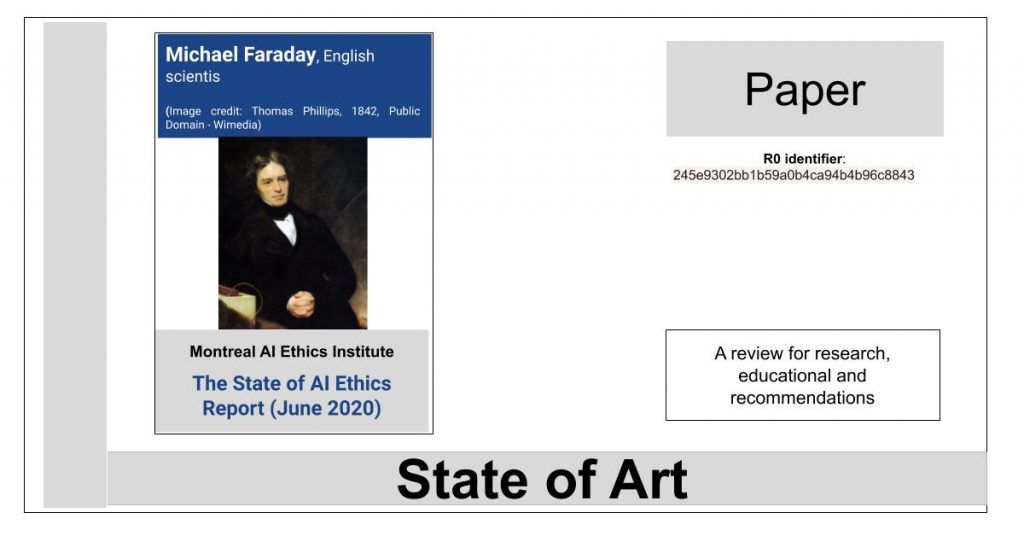
https://editorialia.com/wp-content/uploads/2020/06/the-state-of-a-ethics-report-june-2020.jpg

The State of AI Ethics Report (June 2020)

It has never been more important that we keep a sharp eye out on the development of this field and how it is shaping our society and interactions with each other. With this inaugural edition of the State of AI Ethics we hope to bring forward the most important developments that caught our attention at the Montreal AI Ethics Institute this past quarter. Our goal is to help you navigate this ever-evolving field swiftly and allow you and your organization to make informed decisions.

https://editorialia.com/wp-content/uploads/2020/06/openmined-opensource-to-make-privacy-preserving-of-ai-technologies.jpg

OpenMined: open source to make privacy-preserving of AI technologies

With OpenMined, an AI model can be governed by multiple owners and trained securely on an unseen, distributed dataset.The mission of the OpenMined community is to create an accessible ecosystem of tools for private, secure, multi-owner governed AI

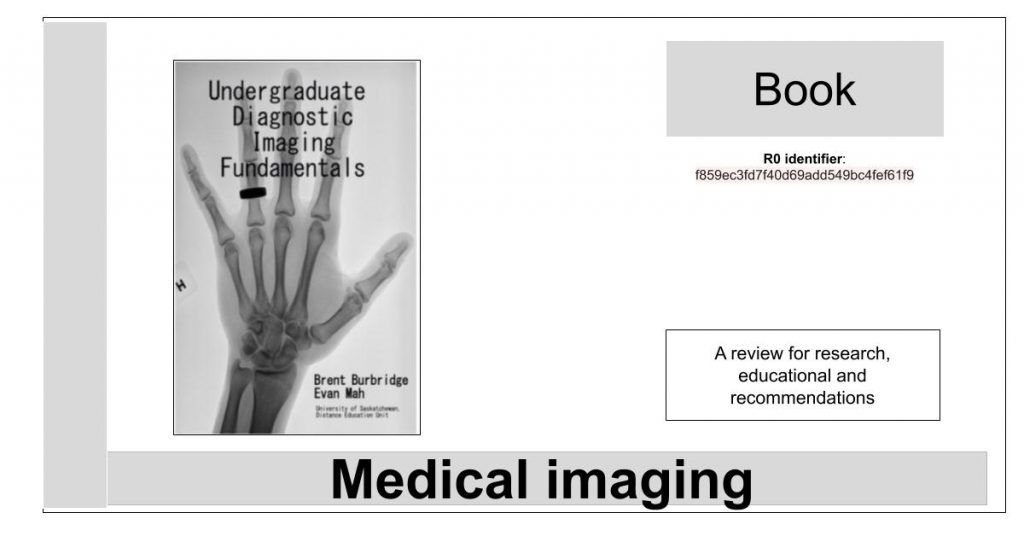
https://editorialia.com/wp-content/uploads/2020/06/undergraduate-diagnostic-imaging-fundamentals.jpg

Undergraduate Diagnostic Imaging Fundamentals

The structure and content of this work has been guided by the curricula developed by the European Society of Radiology, the Royal College of Radiologists, the Alliance of Medical Student Educators in Radiology, with guidance and input from Canadian Radiology Undergraduate Education Coordinators, and the Canadian Heads of Academic Radiology (CHAR).

https://editorialia.com/wp-content/uploads/2020/06/toolkit-for-healthcare-imaging.jpg

Medical Open Network for AI (MONAI), AI Toolkit for Healthcare Imaging

The MONAI framework is the open-source foundation being created by Project MONAI. MONAI is a freely available, community-supported, PyTorch-based framework for deep learning in healthcare imaging. It provides domain-optimized foundational capabilities for developing healthcare imaging training workflows in a native PyTorch paradigm.

https://editorialia.com/wp-content/uploads/2020/06/machine-learning-in-medicine-a-practical-introduction.jpg

Machine learning in medicine: a practical introduction

Following visible successes on a wide range of predictive tasks, machine learning techniques are attracting substantial interest from medical researchers and clinicians. We address the need for capacity development in this area by providing a conceptual introduction to machine learning alongside a practical guide to developing and evaluating predictive algorithms using freely-available open source software and public domain data

https://editorialia.com/wp-content/uploads/2020/06/privacy-preserving-ai.jpg

Privacy Preserving AI – Andrew Trask, OpenMined

Learn the basics of secure and private AI techniques, including federated learning and secure multi-party computation. In this talk, Andrew Trask of OpenMined highlights the importance of privacy preserving machine learning, and how to use privacy-focused tools like PySyft.