LFM3 on local hardware: six models, Rust implementations and the evidence that matters

LFM3 on local hardware: six models, Rust implementations and the evidence that matters

Liquid AI’s LFM3 family brings text, images, speech and structured decisions into six compact models. Its practical interest extends beyond small parameter counts: public implementations and device experiments now allow readers to examine what local inference actually requires. This profile compares the models, investigates five Rust routes, and distinguishes measured installations from provisional hardware recommendations. Raspberry Pi, laptop, browser and headset results reveal both useful capabilities and substantial differences in response time, memory and software maturity. Particular attention is given to quantisation fidelity, multilingual audio, video coverage and the interpretation of decision probabilities. Tables connect applications with inspectable code and realistic evaluation criteria, while concise examples provide starting points for personal trials. The assessment concludes with separate recommendations for a multimodal assistant, a text-only LLM and image understanding. Its central question is practical: which model and implementation can accomplish a verifiable task on the computer available?

LFM3 on local hardware: six models, Rust implementations and the evidence that matters Leer más »

When AI shortens lesson planning, what changes for teachers?

When AI shortens lesson planning, what changes for teachers?

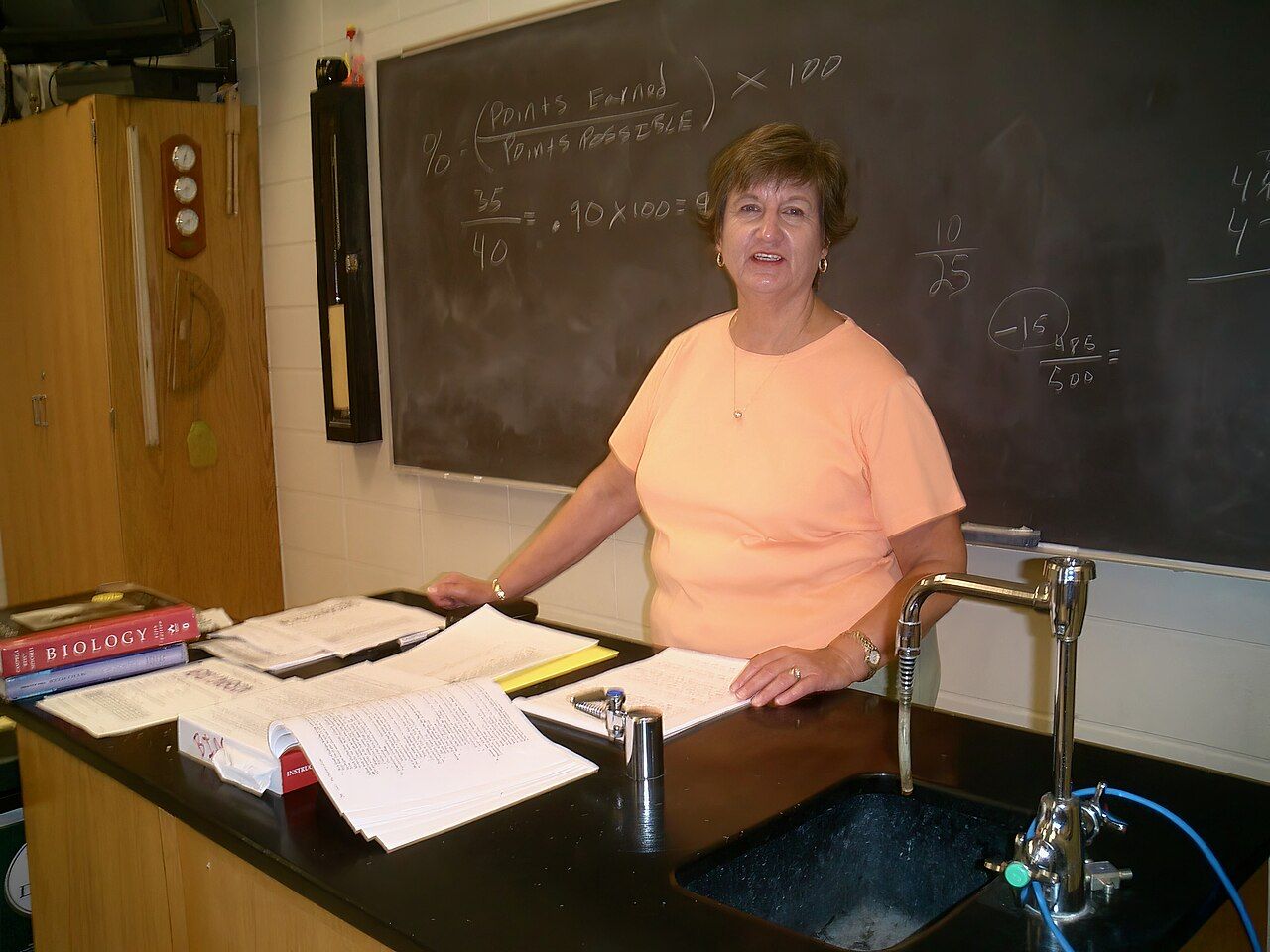
A lesson begins before pupils enter the classroom. AI can help teachers prepare explanations and resources, but a faster draft leaves questions about checking, professional judgement and the rest of the working day. Two school trials in England found reductions in preparation time for specific tasks; neither establishes a reduction in teaching jobs or an improvement in pupil attainment. This sector profile places those findings alongside separate European Union and United States statistics and a US teacher survey on guidance for AI use. It examines how saved time might affect workload, feedback and opportunities to learn, while recognising that additional duties can absorb the gain. The ILO–UNESCO perspective brings teachers’ autonomy and participation into the discussion. The relevant test is what changes for teachers and pupils after the material has been generated.

When AI shortens lesson planning, what changes for teachers? Leer más »

When AI enters the factory, what makes the investment pay?

When AI enters the factory, what makes the investment pay?

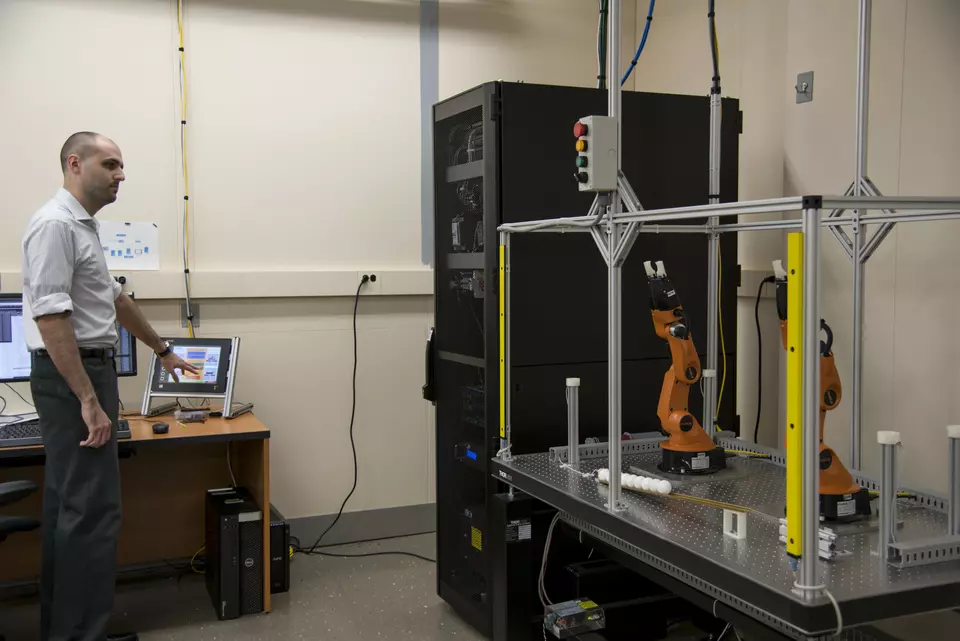
A factory gains little from an accurate prediction if nobody can act on it. AI may help manufacturers detect defects, maintain equipment and coordinate deliveries, but the economic return depends on integration, reliable data and the costs of changing production. This article separates reported adoption from measured performance, using European manufacturing statistics, research on US factories and a survey of Japanese workers. The evidence includes initial productivity losses during adjustment, possible later gains and concerns about employment. A sector profile keeps the different populations and years visible, while an original chart distinguishes general AI use from specific production uses. The assessment follows what happens to quality, costs, suppliers and working conditions. It asks how gains can reach workers and customers, and what evidence would justify an investment beyond a successful demonstration.

When AI enters the factory, what makes the investment pay? Leer más »

A Robotic Seal in the Care Home: Who Decides Whether It Stays?

A Robotic Seal in the Care Home: Who Decides Whether It Stays?

A small white seal arrives in the shared room after lunch. It responds to touch with movements and sounds, and residents are invited to spend time with it. For someone who enjoys the encounter, a few minutes of interest may matter. Someone else may prefer conversation, another activity or no robot at all. PARO, a companion robot studied in dementia care, makes that difference difficult to ignore. What does its responsiveness add, and who decides whether it stays?

A Japanese study published in 2026 compared two schedules of access to the robot. More frequent sessions improved the reported caregiver-burden score, but the difference in residents’ symptom severity was not statistically significant. The study also excluded people who showed aversion to PARO. Alongside an earlier trial comparing an active robot with an inactive plush version, and a survey in which people with dementia expressed their own preferences, these findings offer a more precise picture of what a robotic companion can contribute. This article follows the seal from the photograph to the shared room, examines the human work behind its use and asks what kind of company remains available when a resident would rather decline.

A Robotic Seal in the Care Home: Who Decides Whether It Stays? Leer más »

I. J. Good and the question of controlling a greater intelligence

I. J. Good and the question of controlling a greater intelligence

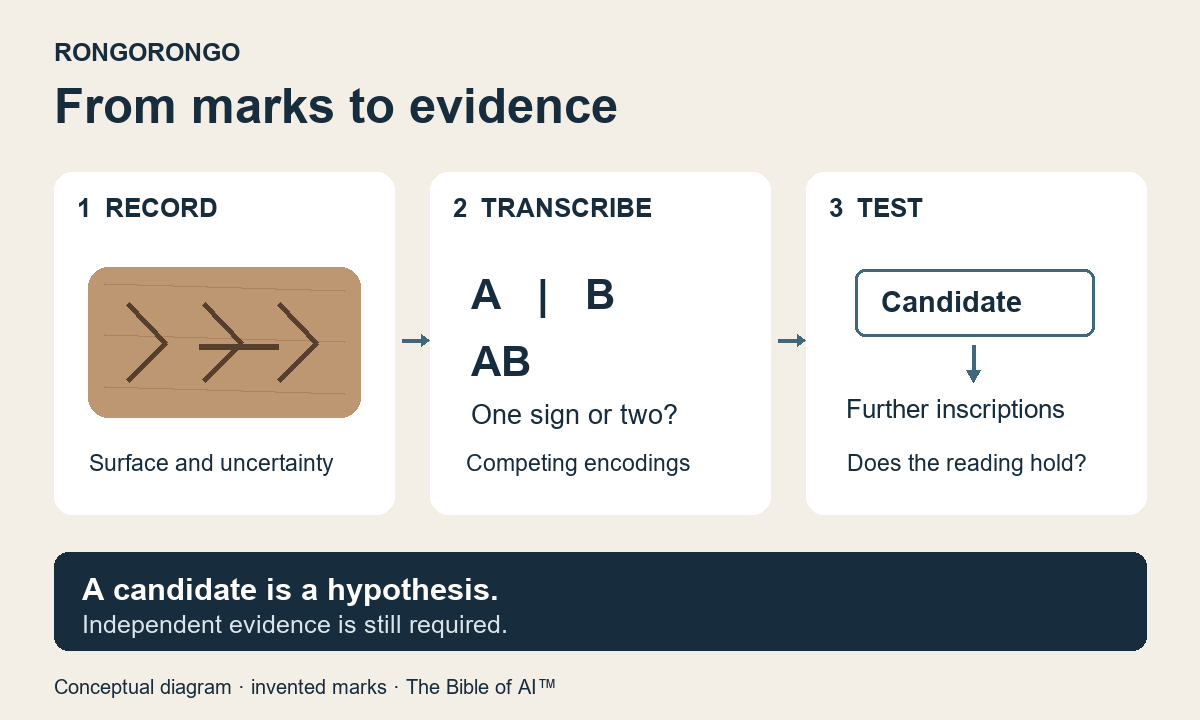
I. J. Good helped turn mathematical ideas into tools for wartime codebreaking. He also imagined a machine capable of designing its successor. His biography follows the evidence behind those achievements, the forecast that missed its century and the question that remains: how could people retain meaningful control over an intelligence greater than their own?

I. J. Good and the question of controlling a greater intelligence Leer más »

An AI finds an equation. What makes it a physical law?

An AI finds an equation. What makes it a physical law?

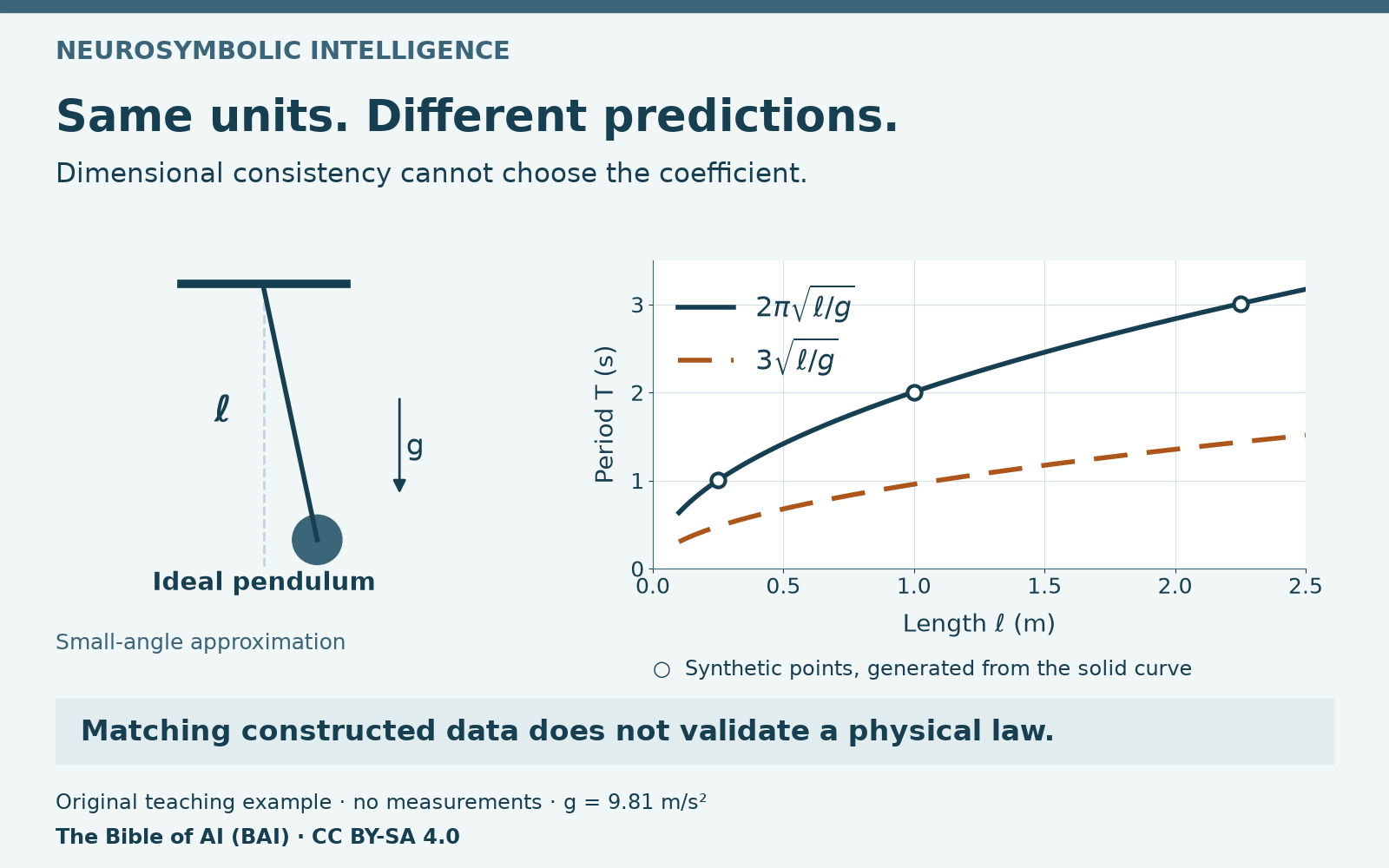
An equation can fit a set of numbers and still fail to describe the physical phenomenon behind them. This article follows an ideal pendulum through two separate questions: whether a proposed expression has compatible units and whether its predictions agree with the evidence. An original example shows why dimensional rules can reject some formulas while admitting others that predict different periods. Research on symbolic regression then explains how learned proposals and explicit constraints can cooperate during the search itself. The discussion distinguishes recovering a known expression from discovering a new law, and reads recent performance claims with their actual denominators, noise conditions and supplied information. The central question is what remains unresolved after an equation has passed a check. Measurements, uncertainty and tests beyond the conditions used to construct a model remain essential to judging what the model can explain.

An AI finds an equation. What makes it a physical law? Leer más »

How does a humanoid robot keep its balance while carrying a box?

How does a humanoid robot keep its balance while carrying a box?

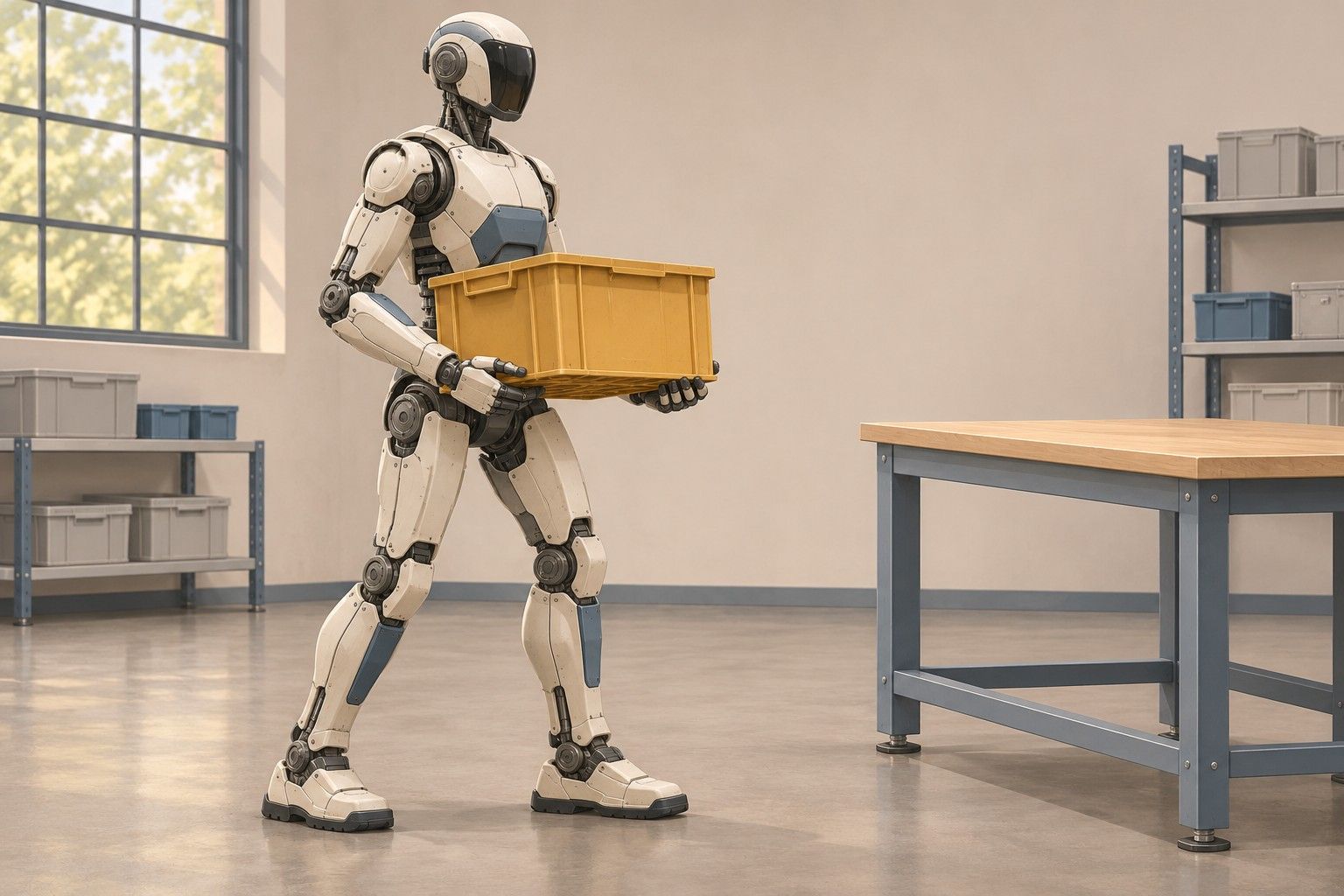
When a humanoid lifts a box, the table stops supporting its weight. Holding the box close reduces the turning effect of its weight. To take a step, the robot must manage the change in support as one foot leaves the floor. How does it learn to make that correction? Experiments in Beijing and Oregon trace the path from a camera image and a changing foot load to a new command at a joint. A separate study follows a robot as it lifts a basket from a side platform, carries it to a table and sets it down. The researchers count a success only when the basket rests securely on the tabletop. A robot can stay upright and still fail its delivery. To judge what the AI contributes, we need to know which movements it controls and whether it recovers when the next box carries its weight differently.

How does a humanoid robot keep its balance while carrying a box? Leer más »