A cloud company can download GLM-5.3, install it on its own computers and inspect the numerical weights that shape its answers. Can it then sell access to customers? For some companies, Z.ai has reserved a say in that decision. The answer depends on what the group does and how much revenue it earns across its businesses.
Z.AI Co., Ltd. · Beijing, China
Z.ai, also known as Zhipu AI, develops the GLM family of models. A customer can run a downloadable model on its own equipment or pay to send requests to a service that runs it. The distinction matters to Z.ai’s business. In the six months to 30 June 2026, its open platform and programming interfaces brought in 825.2 million yuan, or 86.5% of the group’s 953.9 million yuan in revenue. Those figures cover the company’s business before GLM-5.3 appeared in August. Interim report, business review and revenue breakdown, p. 30.
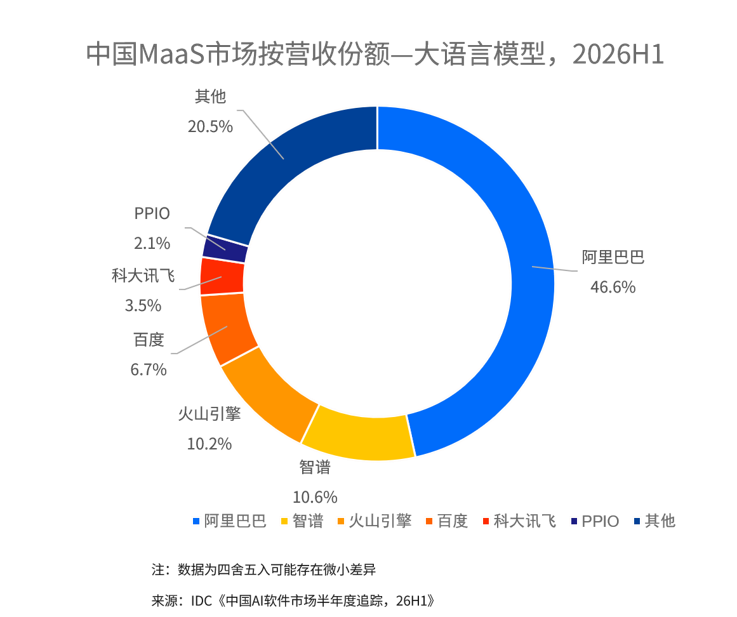
Capital and control. The company listed its shares in Hong Kong in January 2026 under stock code 2513. Investors can buy a stake in the business. A company that downloads GLM receives the rights specified in the licence for that version. In its first-half 2026 survey, IDC put Zhipu second by revenue in China’s market for large language models delivered as a service, at 10.6%, behind Alibaba at 46.6%. The figures describe sales in that Chinese market. Company and share listing · IDC’s comparison of providers.
What changed between two downloads?
With GLM-5.2, Z.ai published the weights under the MIT licence. A company could run the model, adapt it and sell access, keeping the required notices with copies. The full GLM-5.3 licence also permits copying, adaptation and commercial use. Its second clause introduces a review for a defined group of companies. That is a decision about a particular release. Even the similarly named GLM-5.3-Flash carries the MIT licence. GLM-5.2 licence · GLM-5.3 licence, clause 2 · GLM-5.3-Flash licence.
Which companies must pass the review?
Two conditions must coincide. First, the licensee or an affiliate must offer model services that give customers meaningful control over the inputs, settings or training data used to generate answers or adapt a model. Second, the licensee and its affiliates together must earn more than US$10 billion over a period of twelve consecutive months. Revenue from every line of business counts toward that threshold. When both conditions hold, the licensee must pass Z.ai’s security review before any commercial use of GLM-5.3 or a derivative. Z.ai can reasonably determine how it conducts that review and what it covers. Z.ai’s definition and review condition.
Consider a retailer that adds a writing assistant to its product catalogue. Under the licence, embedding a model solely in a particular product feature does not itself make the retailer a model-service provider. Simply forwarding requests to someone else’s hosted model also falls outside the definition. The analysis changes if another company in the retailer’s group already runs a qualifying model service. The licence makes the group relationship material, even if the retailer’s own AI project is small. Scope of the two exclusions.
What can a customer actually choose?
On 5 October 2026, Amazon announced GLM-5.3 on Bedrock for eligible enterprise customers. That gives a business a way to use the model through AWS. Amazon’s announcement establishes availability and identifies the customers it can serve. It gives no account of a security review or the terms the two companies agreed. A business seeking to host a model itself can instead test GLM-5.2 or GLM-5.3-Flash under their published terms. Whether either can do the job depends on the customer’s workload. AWS launch announcement · Bedrock availability.
What would show the practical reach of Z.ai’s condition? A provider could disclose when it requested a review, when Z.ai decided, and whether the result changed a planned launch. Until such a case is documented, the public evidence establishes who holds the contractual decision. Its cost in time or lost business remains an open question.
Information checked on 17 November 2026. Market shares and company revenue refer to the first half of 2026.
Liked this post? Follow this blog to get more.