Articles

Quickstart to ML with dabl. thi is an interesting new python package that makes supervised machinelearning easy

Machine Learning with dabl ( 0.1.8)

“dabl tries to reduce the turnaround time required for a quick baseline estimate of a supervised learning problem. It does so by automating the task of iterating through different techniques of data preprocessing, feature engineering, parameter tuning and model building to generate efficacious baseline models”.

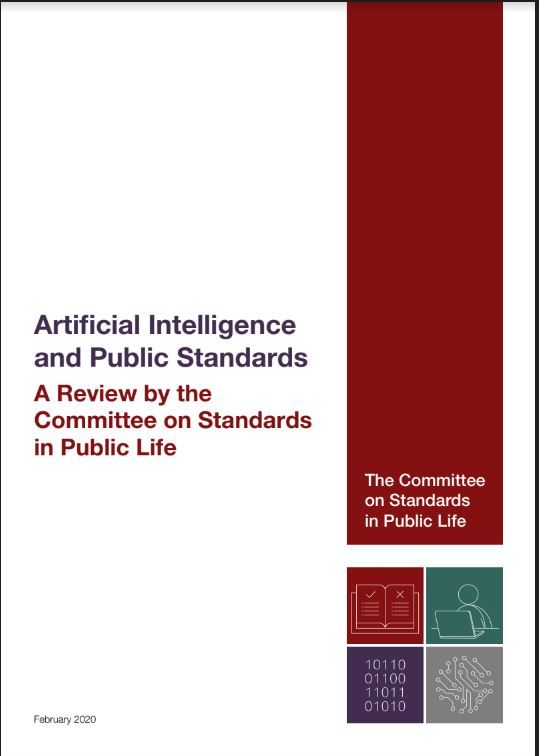
https://editorialia.com/wp-content/uploads/2020/02/machine-learning-and-deep-learning-frameworks-and-libraries-for-large-scale-data-mining-a-survey.jpg

Machine Learning and Deep Learning frameworks and libraries for large-scale data mining: a survey

The combined impact of new computing resources and techniques with an increasing avalanche of large datasets, is transforming many research areas and may lead to technological breakthroughs that can be used by billions of people. In the recent years, Machine Learning and especially its subfield Deep Learning have seen impressive advances. Techniques developed within these two fields are now able to analyze and learn from huge amounts of real world examples in a disparate formats. While the number of Machine Learning algorithms is extensive and growing, their implementations through frameworks and libraries is also extensive and growing too.

https://editorialia.com/wp-content/uploads/2020/06/free-and-open-machine-learning-documentation-release-03.jpg

Free and Open Machine Learning Documentation Release 1.0.1

This book is all about applying machine learning solutions for real practical use cases. This means the core focus is on outlining how to use machine learning in a simple way so you can benefit of this powerful technology.
Machine learning is an exciting and powerful technology. The continuous use and growth of machine learning technology opens new opportunities. This great technology should available to use for everyone. This means that everyone should be able to learn, play and create great applications using machine learning technology.

Manifiesto de IBM con motivo del 50 encuentro en el foro de Davos. ‘Regulación de precisión para la inteligencia artificial’

El panel de Davos, organizado por el CEO de IBM, Ginni Rometty, explora la regulación de precisión de la inteligencia artificial y la tecnología emergente. El evento lanza formalmente IBM Policy Lab, un nuevo foro para promover recomendaciones de políticas audaces y viables para una sociedad digital y fomentar la confianza en la innovación.

People + AI Guidebook by Google

Escrita para profesionales de experiencia de usuario (UX) y gerentes de producto como una forma de ayudar a crear un enfoque centrado en el ser humano para la IA en sus equipos de producto.

A scalable pipeline for designing reconfigurable organisms

Most technologies are made from steel, concrete, chemicals, and plastics, which degrade over time and can produce harmful ecological and health side effects. It would thus be useful to build technologies using self-renewing and biocompatible materials, of which the ideal candidates are living systems themselves. Thus, we here present a method that designs completely biological machines from the ground up: computers automatically design new machines in simulation, and the best designs are then built by combining together different biological tissues. This suggests others may use this approach to design a variety of living machines to safely deliver drugs inside the human body, help with environmental remediation, or further broaden our understanding of the diverse forms and functions life may adopt.

Aprendizaje automático en análisis de datos sísmicos 4D

(Deep Neural Networks in Geophysics) Esta tesis investiga las propiedades fundamentales de las redes neuronales en aplicaciones geofísicas. Incluye la reutilización de redes neuronales entrenadas, que son excelentes para identificar imágenes y aplicarlas para identificar capas de rocas y eventos geológicos en imágenes geofísicas. Esta tesis profundiza para evaluar si la teoría de incluir información específica de …

Aprendizaje automático en análisis de datos sísmicos 4D Read More »

El Programa de Certificación de Ética para Sistemas Autónomos e Inteligentes (ECPAIS)

El objetivo del Programa de Certificación de Ética para Sistemas Autónomos e Inteligentes (ECPAIS) del IEEE SA es crear especificaciones para los procesos de certificación y marcado que promuevan la transparencia, la rendición de cuentas y la reducción del sesgo algorítmico en los Sistemas Autónomos e Inteligentes (A / IS). El objetivo de ECPAIS es …

El Programa de Certificación de Ética para Sistemas Autónomos e Inteligentes (ECPAIS) Read More »