A Father Wanted His Daughter to Hear His Voice Again

A Father Wanted His Daughter to Hear His Voice Again

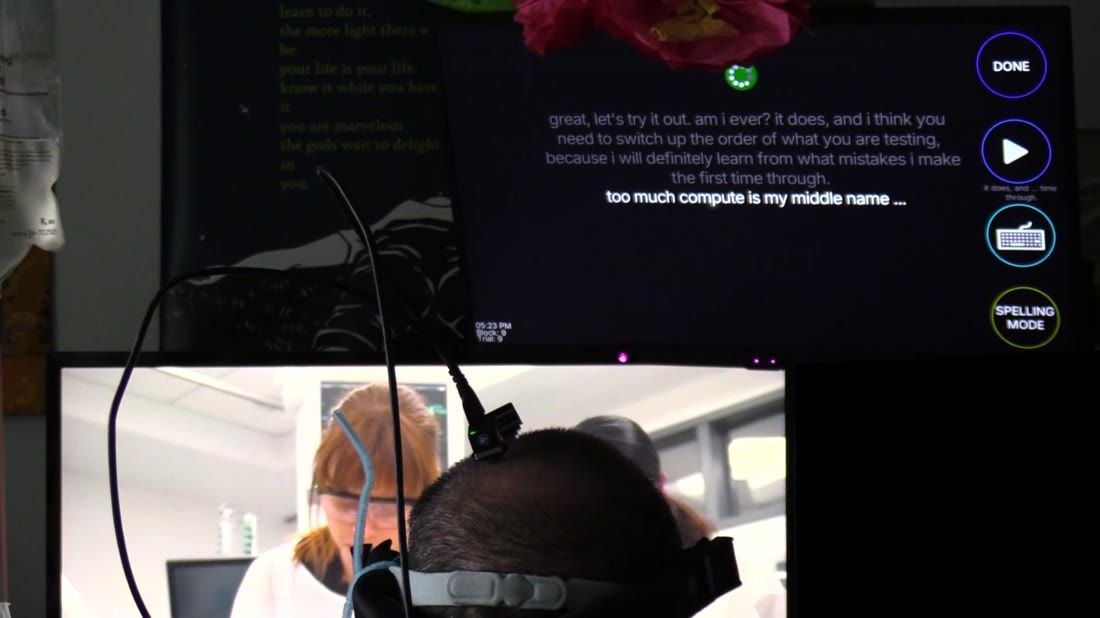
His daughter barely remembered what his voice sounded like. He wanted her to hear it again. Living with ALS had made his speech difficult to understand, but he still had jokes to tell and opinions he wanted to put into his own words. In a research recording, he uses an experimental speech system to tease one of the people who built it. The joke is his. So is the decision about when the room gets to hear it.

The system picks up brain activity as he tries to speak. Words appear on a screen, where he can use his gaze to correct them before a loudspeaker reads them in a voice made to sound like his own. At home, a trained care partner helps set up the equipment. In conversation there is no answer sheet, so the researchers asked the person who knew what he meant to say: how often did the machine get it right? His answer tells us more about an ordinary family exchange than a score on a test sentence alone. The article follows this one participant’s experience and looks at communication tools people can use today while implanted speech systems are still being studied.

A Father Wanted His Daughter to Hear His Voice Again Leer más »

Reading a Letter Shouldn’t Mean Sharing It: What AI Offers Blind Readers

Reading a Letter Shouldn’t Mean Sharing It: What AI Offers Blind Readers

The tea packet in the photograph says Earl Grey. A blind reader took the picture because that was the detail they wanted. Now put a letter from your doctor in place of the packet. Before you know what it says, you may already have had to choose someone to read it to you. A phone that speaks the printed words aloud gives you the chance to make that decision in a different order.

There are several ways to do this today. Seeing AI and Lookout can help a reader find printed text and listen to it. When the question is about a picture, a reader can ask for the detail that matters to them. Be My Eyes also offers a choice many people will recognise from ordinary life: sometimes you want a second pair of eyes. The choice becomes more consequential when the photograph contains a name, an appointment or a private message. This article follows one real photograph through those choices, including what happens when the line you need falls outside the frame. It ends with a question for the sender. If a clinic can issue a letter, why should its patient have to photograph it to read it?

Reading a Letter Shouldn’t Mean Sharing It: What AI Offers Blind Readers Leer más »

Power from the back of the chip: what changes for AI processors?

Power from the back of the chip: what changes for AI processors?

A processor needs a steady voltage at the instant a group of transistors switches. In a densely wired chip, the metal that supplies current competes for space with the wires that carry signals. Moving the supply network to the back of the silicon changes the route electricity takes to reach those transistors.

What difference could that make when an AI processor runs an inference? An Intel experiment on a fabricated processor core gives a measured frequency benefit. A separate study of an Arm core design shows how the choice of power rails changes the voltage lost along the way. Together they explain which parts of a chip can gain operating margin, why clock speed alone cannot predict response time, and what an engineer would have to measure to establish energy per inference. The comparison also helps interpret recent process results that combine backside power with changes to the transistors themselves.

Power from the back of the chip: what changes for AI processors? Leer más »

What Robots Learn from Watching Human Hands

What Robots Learn from Watching Human Hands

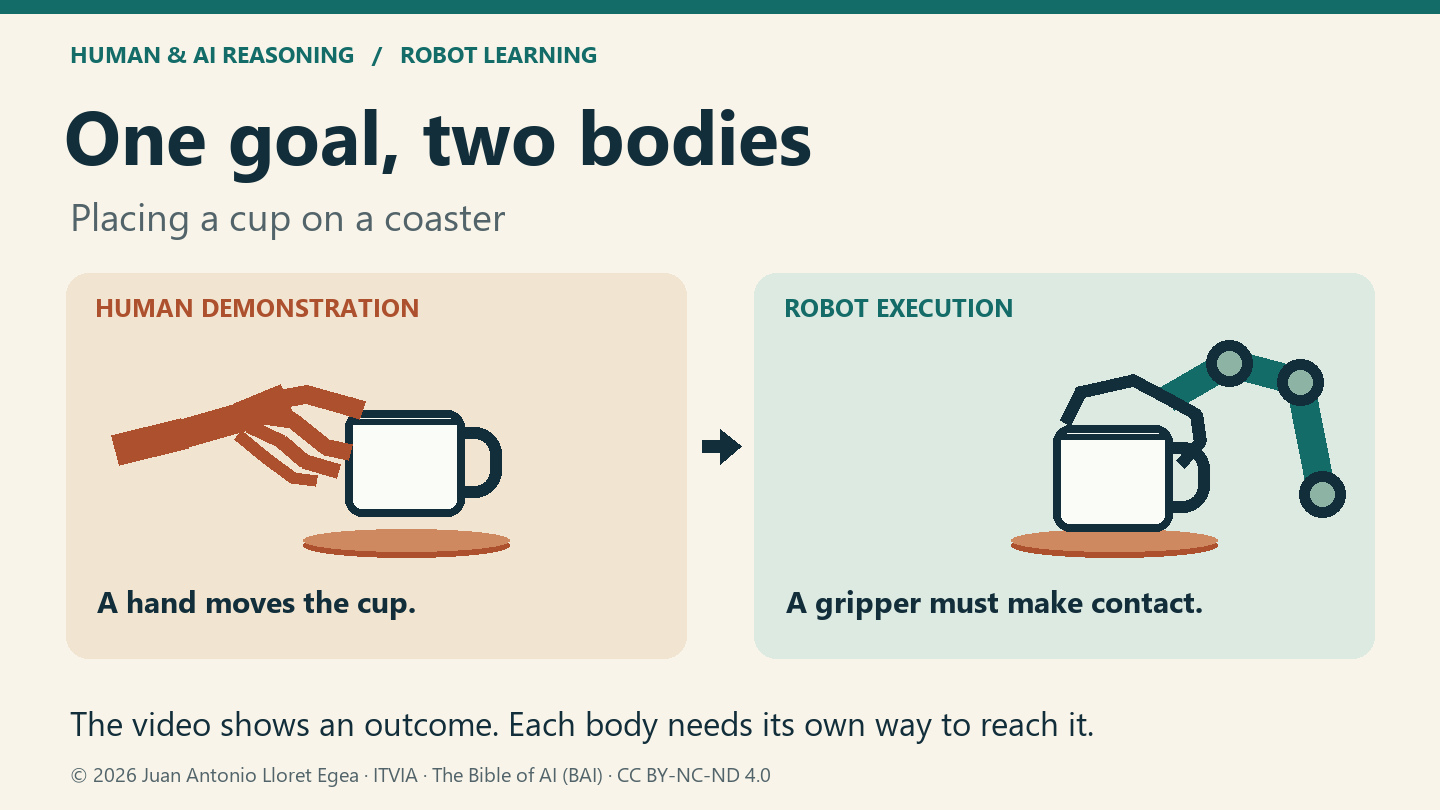
A person can show a robot where a cup belongs without showing how a gripper should hold it. That gap between a visible goal and an executable action shapes how robots learn from human demonstrations. This review examines six studies of physical manipulation, from learning through practice after a single demonstration to estimating robot actions from synthetic video. Some systems use human motion to guide a controller trained on robot demonstrations. Others recover relations between hands and objects or exploit experience acquired across robots and environments. We examine what each system observes, which information must come from elsewhere, and how researchers measure transfer on physical hardware. Success under a change of viewpoint answers a different question from success after an object slips. These distinctions clarify the contribution of the human demonstrator and show why the strongest evidence for learning comes from tasks that test which features of the demonstration matter.

What Robots Learn from Watching Human Hands Leer más »

Who answers for AI? Lessons from the newsroom and the assembly line

Who answers for AI? Lessons from the newsroom and the assembly line

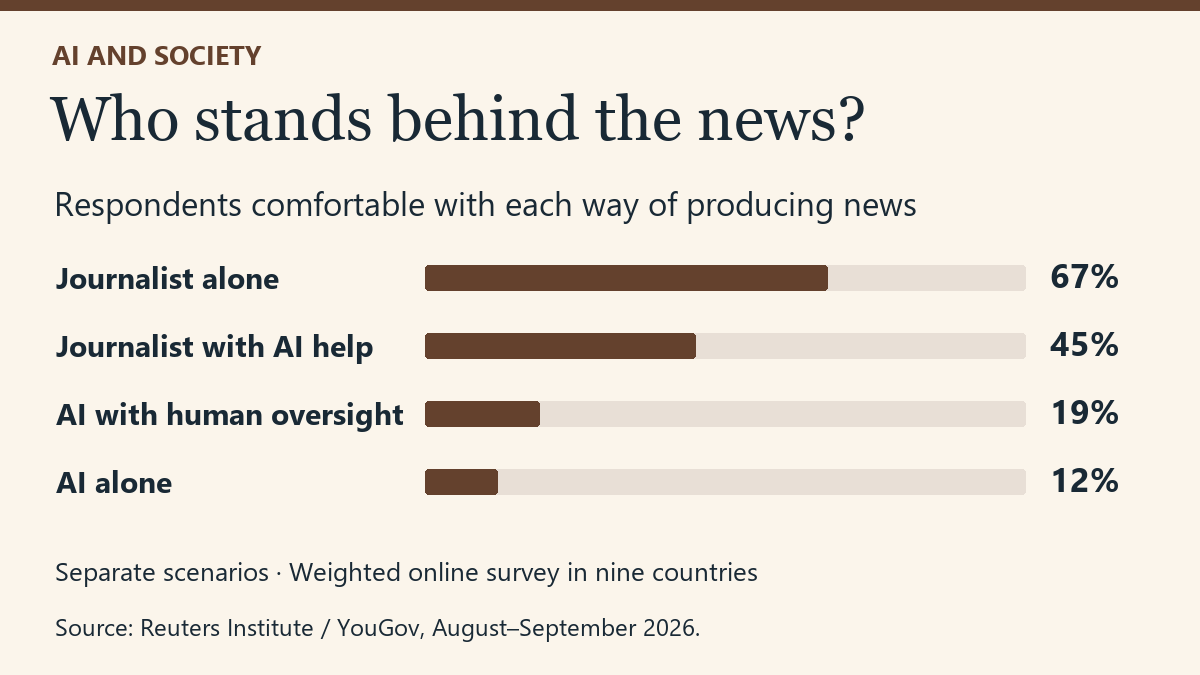
A reader wrongly identified in a photograph needs a correction. A driver warned about a faulty weld needs to know whether the car is safe. Neither can get an answer from the machine that helped make the product. A newspaper, a documented vehicle recall and a ruling about an airline’s chatbot show how to trace responsibility to the people and organisations that can act. An AI label can tell us how an image was made. Who will put things right?

Who answers for AI? Lessons from the newsroom and the assembly line Leer más »

R0:aa77bca17589f025d763d708bbb99028-Can LLMs Improve Their Own Harness? A Controlled Study on ARC-AGI-3

Can LLMs Improve Their Own Harness? A Controlled Study on ARC-AGI-3

If a language model can rewrite the software it uses to play a game, how can it tell whether an edit was worth keeping? Jens Lehmann and Sahar Vahdati let each model build a program, play five practice games and revise that program twice. They then compared all three versions on twenty games whose results had been withheld during development. Across 27 independent sequences, the practice scores rose by 8.42 points on average. On the reserved games, the gain shrank to 2.80 points, and twelve sequences finished below their starting score. Cost tells a similarly mixed story. Eighteen final programs were cheaper to run, but only nine of those also played better. By preserving the original programs and their descendants, the study reveals something a final leaderboard cannot show on its own: when an agent already plays well, how much of that ability did it acquire through revision, and how much was present from the start?

Can LLMs Improve Their Own Harness? A Controlled Study on ARC-AGI-3 Leer más »

R0:abbc9fad0e8a3823e93438ffbc99b607-FrontierPhysics: Evaluating Agents for End-to-End Physics Research

FrontierPhysics: Evaluating Agents for End-to-End Physics Research

Can a research agent tell when its own calculation has led it astray? In FrontierPhysics, physicists turned investigations from their own laboratories and research groups into 56 problems. An agent receives a brief, explores the literature, chooses a method and submits a manuscript alongside results that an examiner can check. The strongest configuration passed 46 of 168 trials. It solved 25 problems at least once in three attempts, but only eight on every attempt. The most revealing findings emerged when physicists revisited the experimental records. Some agents had checked a result using the very assumption that produced it. In other cases, a sound answer had failed the examiner’s test. Nine such judgements changed in the detailed audit of one configuration. Together, the repeated trials and the expert review illuminate a practical question for any physicist considering an agent’s work. What evidence would persuade another researcher that the result survives a genuinely independent check?

FrontierPhysics: Evaluating Agents for End-to-End Physics Research Leer más »

Who gets to say yes to AI? A data centre in your town

Who gets to say yes to AI? A data centre in your town

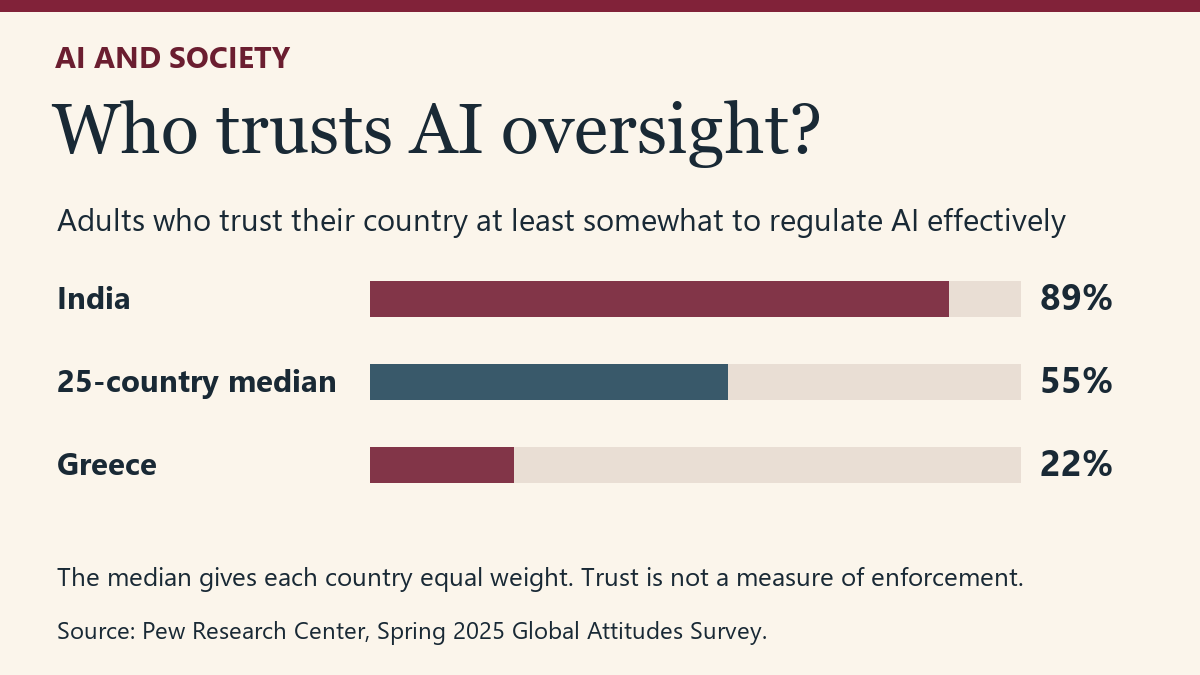
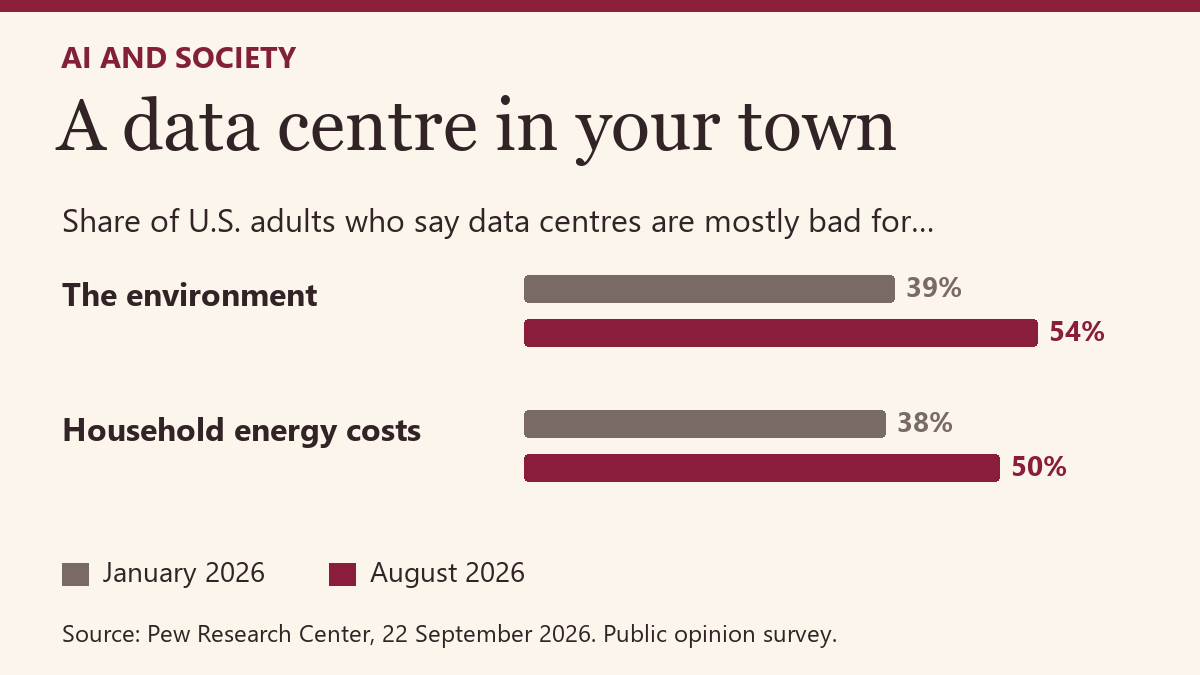
Who pays for the power lines when a data centre leaves town? Residents weigh promised jobs against electricity demand, water use and the cost of putting things right. U.S. survey evidence shows how public attitudes towards energy costs and the environment have changed. Global electricity projections tell a different part of the story. This opening essay follows the decision back to the town that must live with it, from the promise of permanent jobs to water use in a dry year. It asks what residents should be able to inspect before a permit is granted, how people who seldom attend a public hearing can take part, and which conditions would give them a remedy if a promise is broken.

Who gets to say yes to AI? A data centre in your town Leer más »

Computing where data lives: what resistive memory could change for AI

Computing where data lives: what resistive memory could change for AI

A neural network uses the same learned weights for many predictions. Keeping those weights in a resistive memory array lets an electrical circuit calculate weighted sums where the values are stored. How much work does this save once inputs, conversions and intermediate results are counted? Four experimental studies provide different parts of the answer. A phase-change memory chip shows how read precision changes throughput. A resistive switching chip demonstrates image classification and identifies the data transfers omitted from its peak efficiency figure. Two studies published in 2026 examine the cost of programming weights and the difficulty of fitting a small vision model to a physical array. Together they explain where a fixed model could benefit, which measurements can be compared and what a system designer would still need to know before estimating energy per prediction or the cost of deployment.

Computing where data lives: what resistive memory could change for AI Leer más »