What can stacked CFET transistors change for AI chips?

What can stacked CFET transistors change for AI chips?

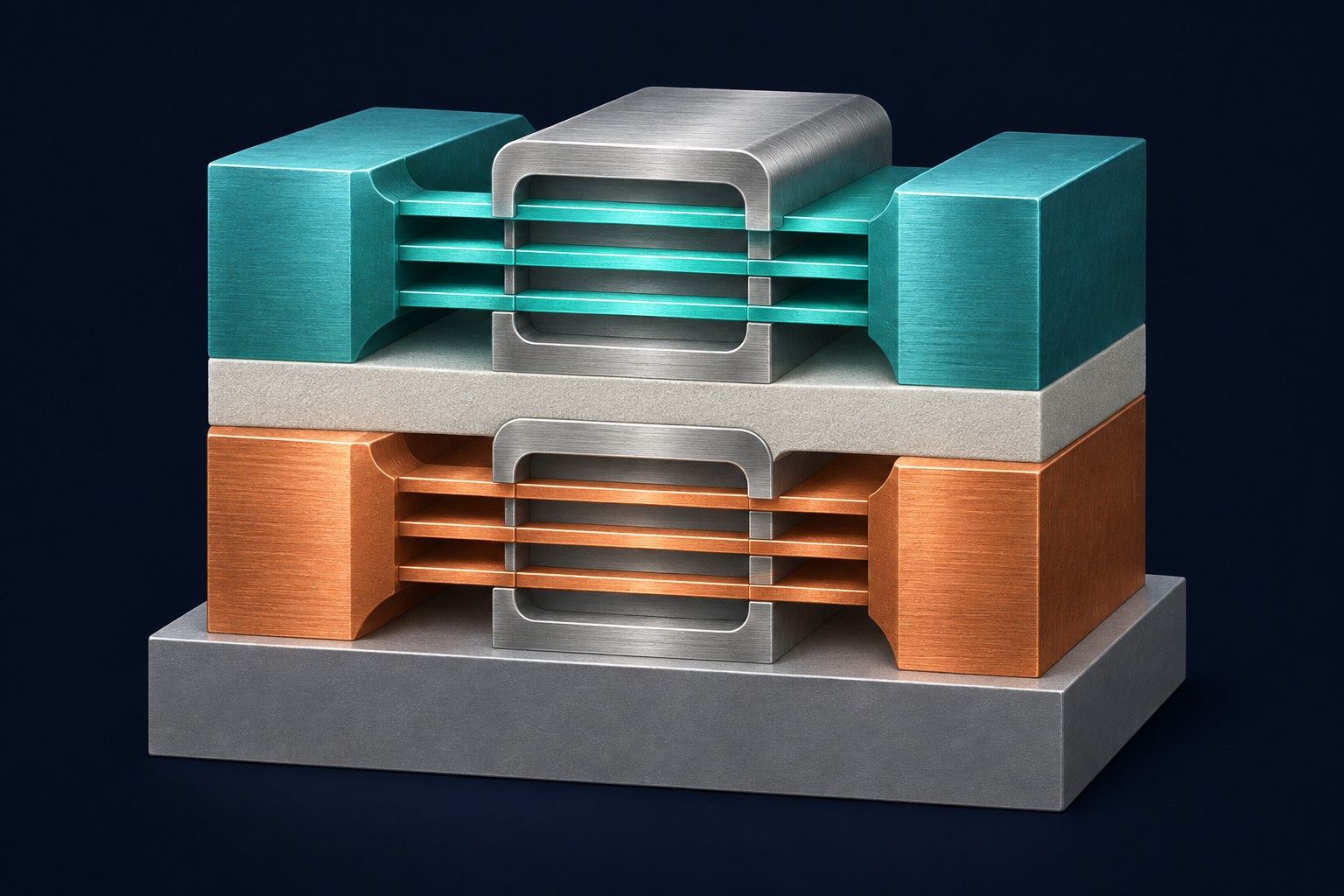
What could stacked CFET transistors change for an AI chip? A logic gate normally places two complementary switches beside one another. Moving one above its partner can bring neighbouring gates closer and shorten the wires that carry intermediate results through a matrix engine. Intel and imec have tested stacked devices in silicon. TSMC has demonstrated a ring oscillator and a working memory cell. A separate study lets us ask what those results might mean for inference. Its researchers laid out the same arithmetic array with two transistor technologies and compared wire length, footprint and power at different operating points. A smaller array could run faster, yet draw more power when it did. The practical question is whether an accelerator can use that extra margin to deliver the same model output with less energy once memory traffic and cooling are counted.

What can stacked CFET transistors change for AI chips? Leer más »

Why does an AI accelerator wait for memory? Inside high-bandwidth memory (HBM)

Why does an AI accelerator wait for memory? Inside high-bandwidth memory (HBM)

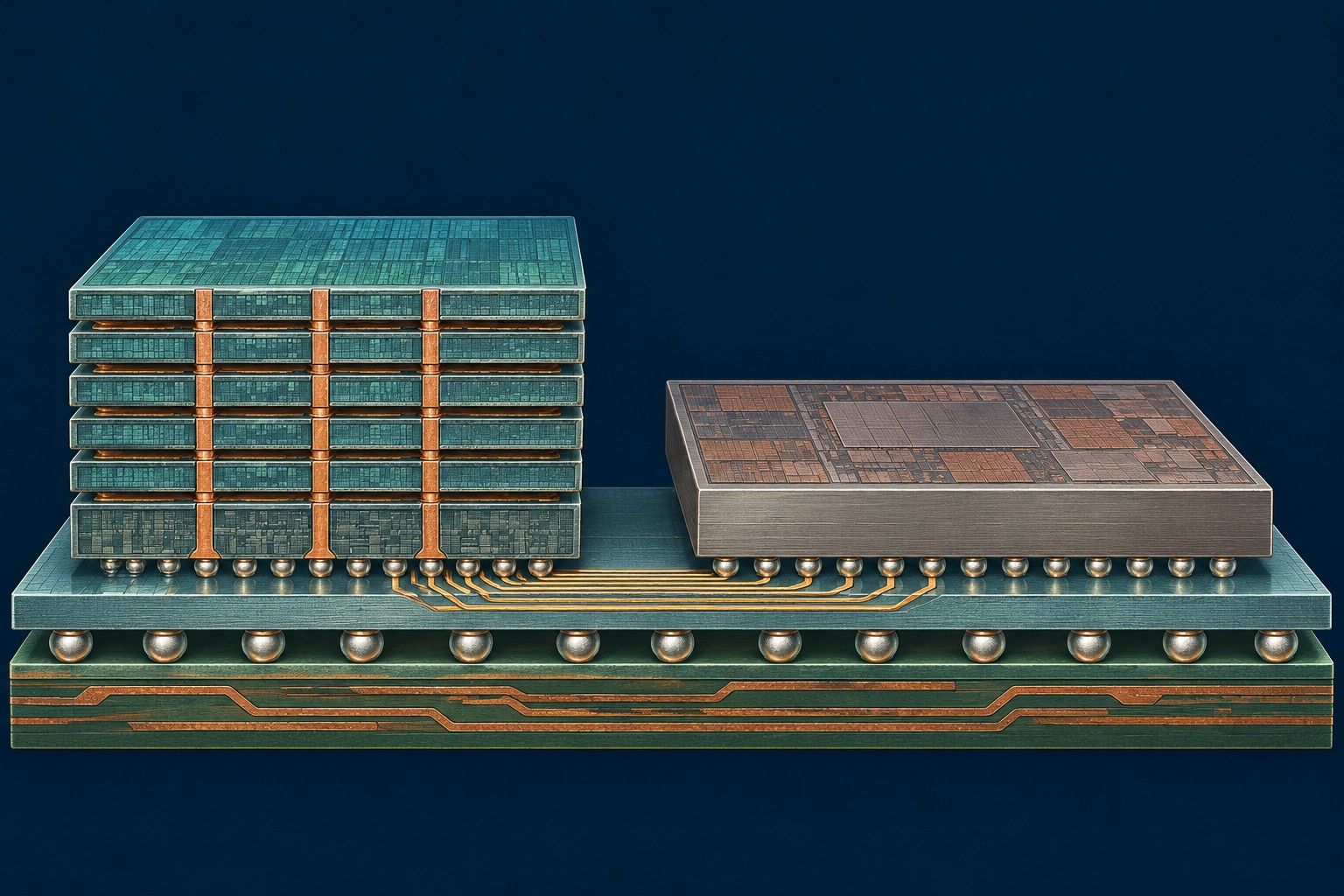
High-bandwidth memory (HBM) sits beside an AI accelerator and feeds the units that do the arithmetic. Why can a processor still spend time waiting for data, even when the model fits in memory? Follow a token from the interconnect of Huawei’s Atlas 960E to the weights an expert needs to read. Then look at an experiment on an NVIDIA A100 in which the same attention calculation finished sooner despite doing more arithmetic. The difference lay in how often intermediate results crossed the boundary between the processor and its memory. Specifications from AMD and Google help distinguish how much data a chip can hold from how quickly it can read them. For someone using a language model, the final test is whether these changes shorten the wait between tokens or let more people receive timely answers.

Why does an AI accelerator wait for memory? Inside high-bandwidth memory (HBM) Leer más »

When does a faster link make AI faster? Huawei’s Ascend 960DT and Atlas 960E

When does a faster link make AI faster? Huawei’s Ascend 960DT and Atlas 960E

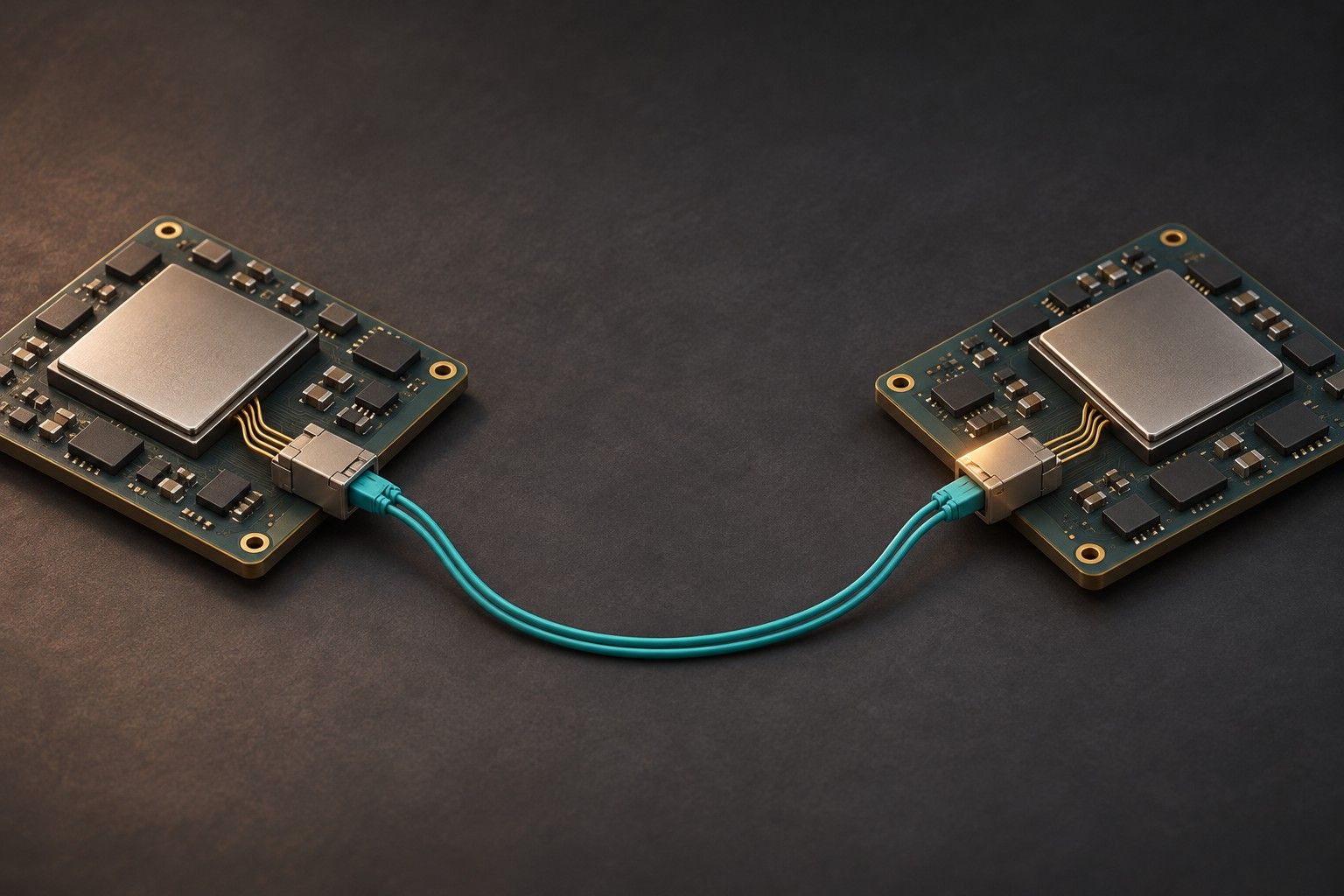
Huawei’s Ascend 960DT and Atlas 960E raise a practical question for AI. When parts of a language model run on different chips, how much of the wait for the next token comes from moving data between them? Follow one token as its numerical representation travels to a remote expert and the result comes back. Huawei’s design brings optics close to the electronics and gives the accelerators a shared way to address memory. An earlier system, CloudMatrix384, offers something the new design still needs: published measurements showing how the pace of an individual reply changes as more requests share the machine. We examine what those results establish, what Huawei has announced for the Atlas 960E, and how a test at fixed response time could show whether a faster link delivers more useful work for each joule.

When does a faster link make AI faster? Huawei’s Ascend 960DT and Atlas 960E Leer más »

R0:0fca8348a9f334da8f8573081f02e921-Autonomous robotic operation controlled by wave-based neuromorphic hardware

Autonomous robotic operation controlled by wave-based neuromorphic hardware

A small robotic car approaches an obstacle. Its distance readings travel by Bluetooth to a dish of water, where six actuators set waves in motion. A camera captures the interference pattern, a classifier reads it and the car receives an instruction to turn. Jacob Zohar and colleagues used this arrangement to demonstrate that a physical wave field can participate in the control of a moving vehicle. Their experiment raises a question that matters whenever a machine acts in the world. Could an independent observer explain why it turned at a particular moment? The published route shows what the car did, and the archived five-class examples show which obstacle configurations that separate classification test included and which it left out. Reconstructing an individual decision requires the readings, images and motor command from the same moment. The distinction also matters for the proposed magnetic successor to the water reservoir, whose obstacle recognition the authors studied through micromagnetic simulation.

Autonomous robotic operation controlled by wave-based neuromorphic hardware Leer más »

When Artificial Touch Improves Grasp Control

When Artificial Touch Improves Grasp Control

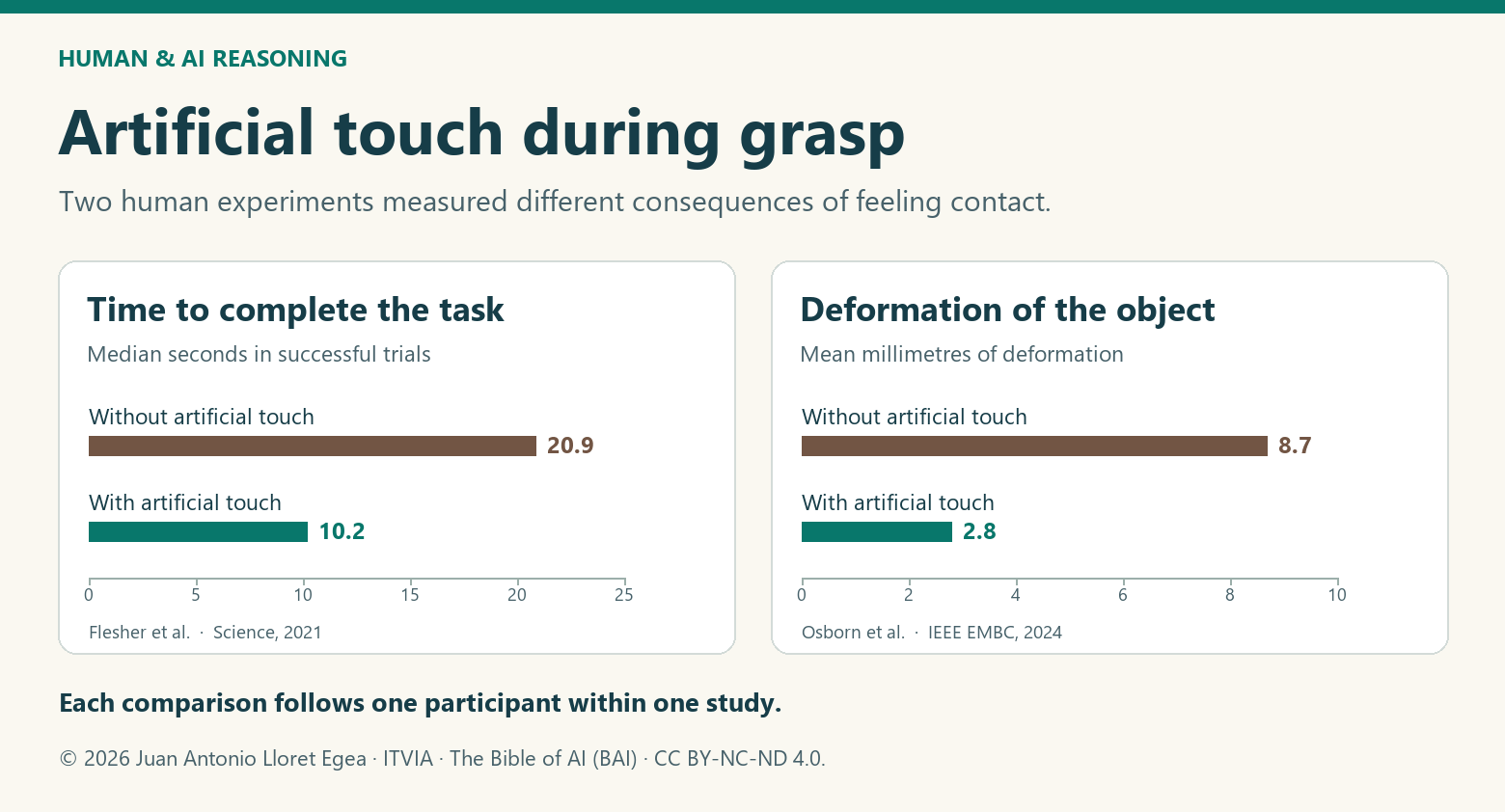
When a hand closes around a fragile object, the person controlling it needs to know when contact occurs and how firmly to hold it. A bidirectional brain–computer interface can return information from a sensor to the person while a decoder translates intended movement into action. Human experiments have tested how much this return signal contributes to grasping. Participants have reported where contact occurred, distinguished aspects of shape and, in individual studies, moved objects faster or deformed them less. A recent experiment with a hand orthosis also tested a controller that automatically adjusted grip force. Its design reveals why successful grasping can depend on both a sensory cue and assistance from the device. This review examines what each comparison establishes, how long electrically evoked sensations remain available, and which evidence would support a claim about independent use in daily life. Completion time and object deformation capture different aspects of grasp quality.
When Artificial Touch Improves Grasp Control Leer más »